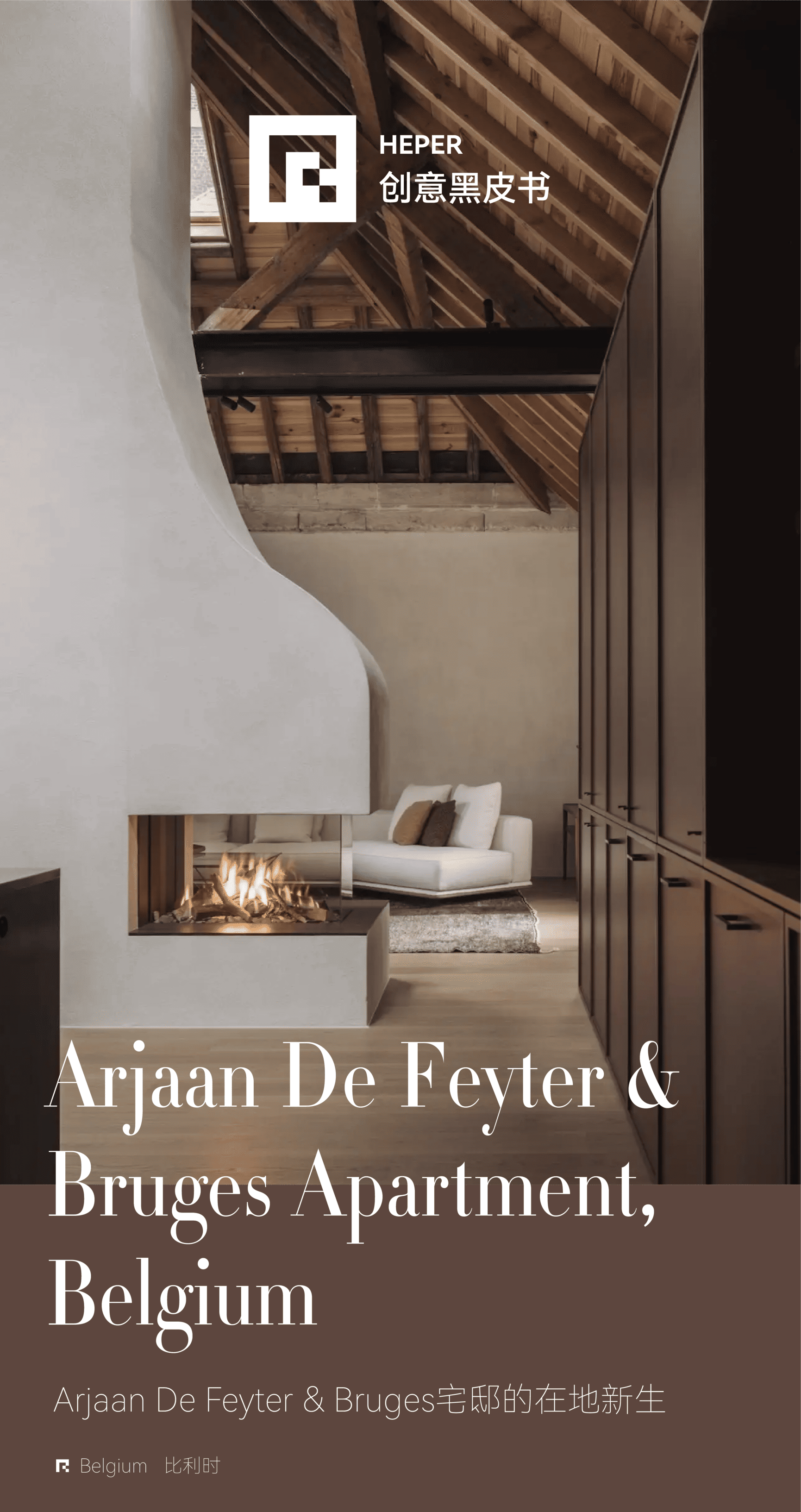
Arjaan De Feyter & Bruges宅邸的在地新生
Residential
Bruges Apartment
Belgium
Arjaan De Feyter
2025
Private
Tijs Vervecken


Arjaan De Feyter & Bruges宅邸的在地新生
 Previous
The owners of the Bruges Apartment are a couple who spent their careers living abroad for extended periods. After years of expatriate life, they decided to return to Belgium and settle down, purchasing this neoclassical apartment in Bruges. Their task for Belgian architect Arjaan De Feyter was to construct a home defined by their personal stories and refined forms.
Bruges Apartment的业主是一对在职业生涯中长期旅居海外的夫妇,他们在长期的旅居生活后决定重返比利时定居,并购入了这间位于布鲁日的新古典主义公寓。因此,比利时建筑师 —— Arjaan De Feyter的任务,是为他们构筑一个由个人故事与精致形式共同定义的家。
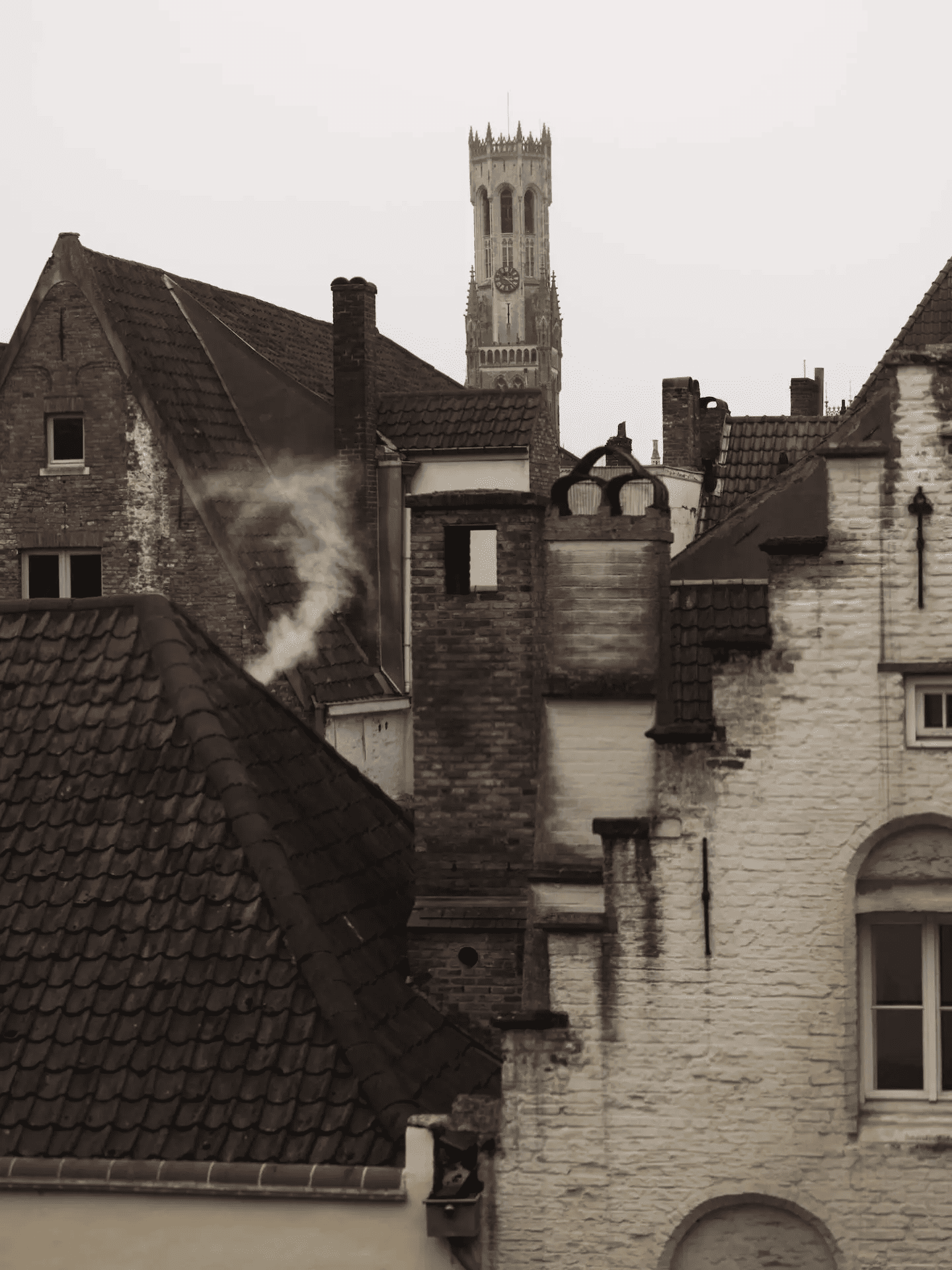
Located in the ancient city of Bruges in northwestern Belgium, the Bruges Apartment resides within Huis van Hamme, an 18th-century classical mansion situated next to Saint Walburga Church and the College of Europe.
Bruges Apartment坐落于比利时西北部的古城布鲁日,位于一栋18世纪的古典主义宅邸 —— Huis van Hamme之内,毗邻圣沃尔布加教堂和欧洲学院。
This historic mansion, protected as a heritage site since 1974, has been renovated and subdivided into several independent residential units, striking a unique balance between heritage preservation and contemporary living.
这栋自1974年起就被列为保护建筑的历史宅邸,在经过整体改造后被分为几个独立的住宅单元,使其在传承与当代生活之间找到了独特的平衡。
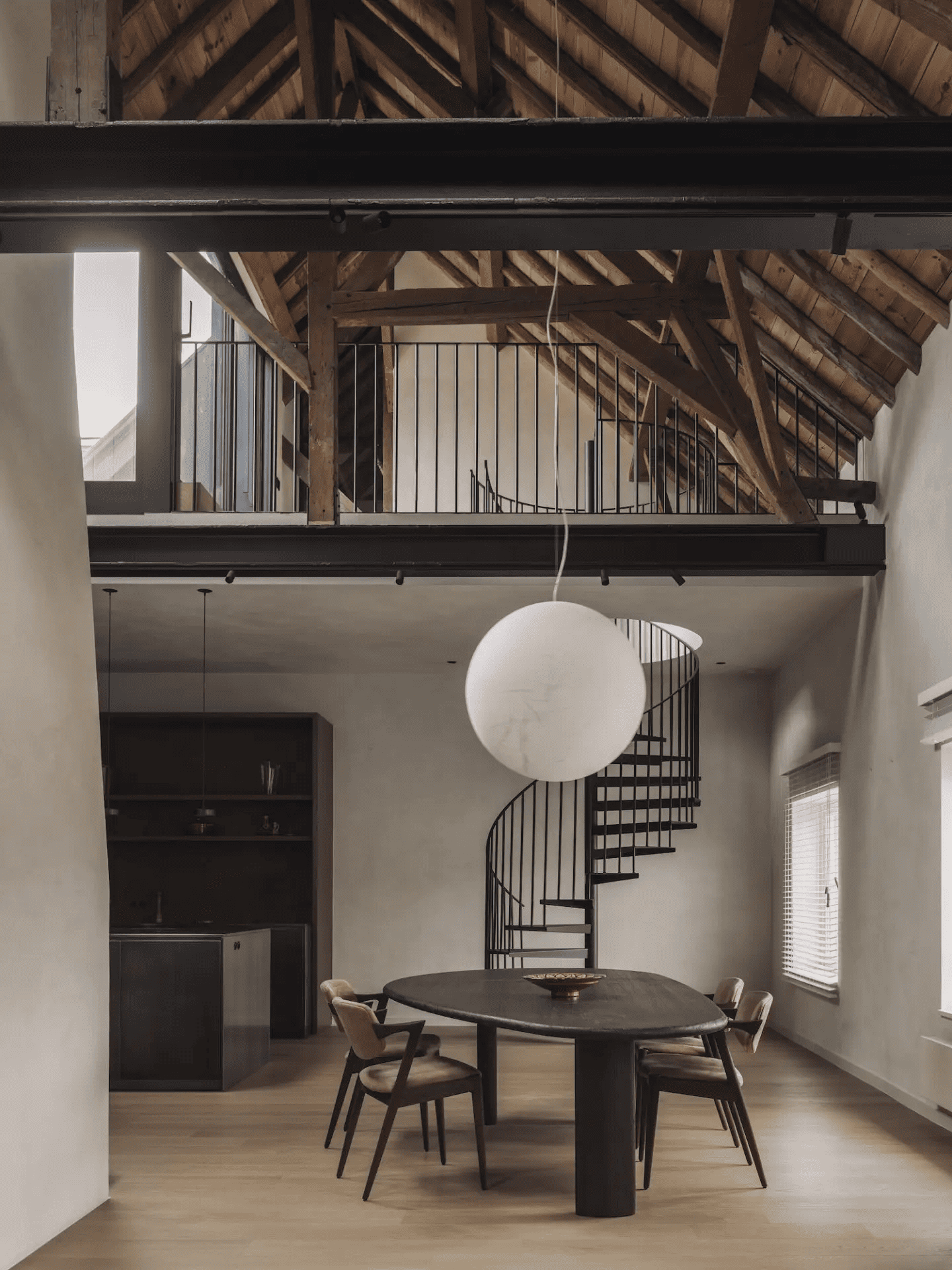
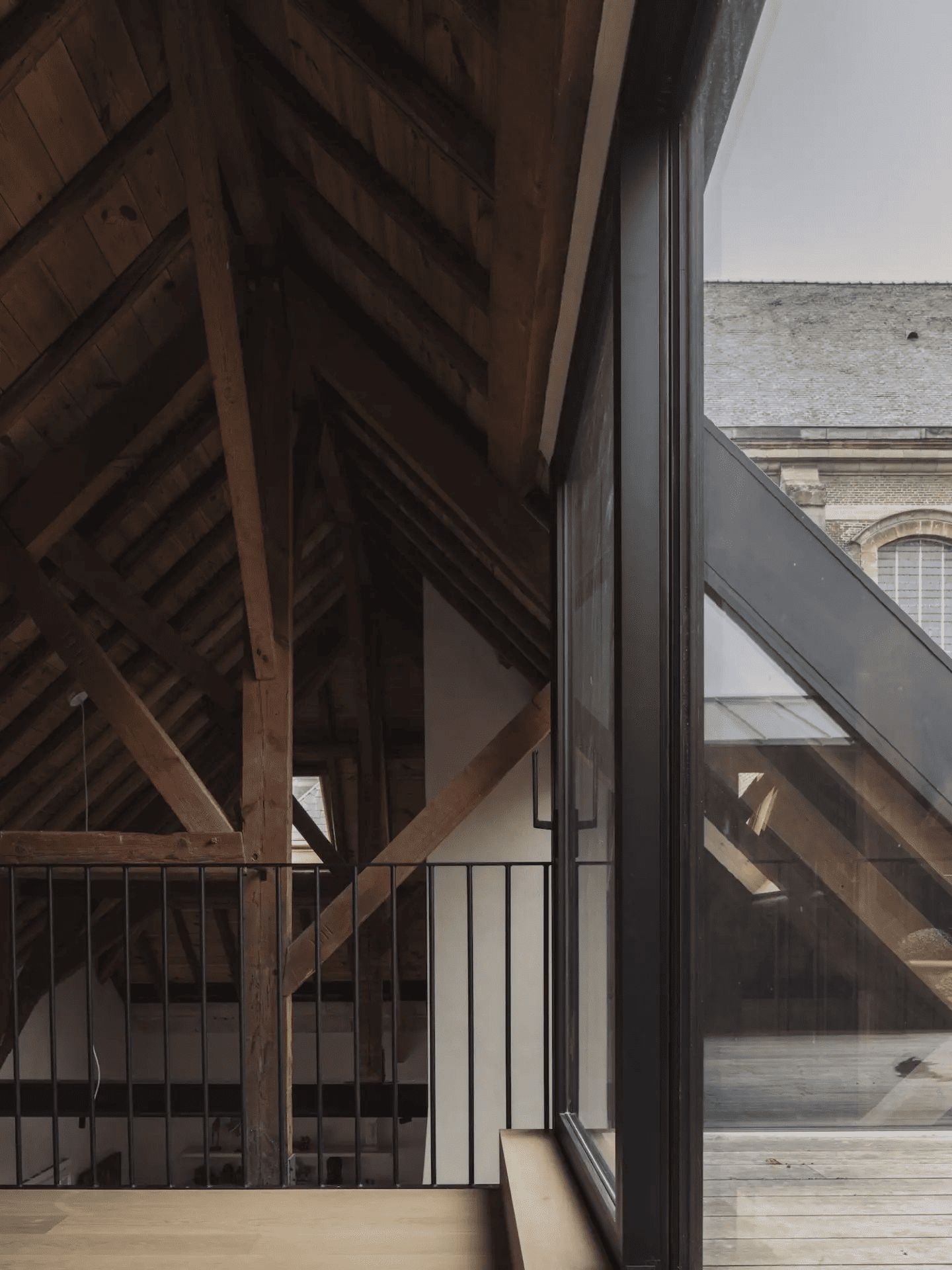
In terms of spatial layout, the apartment spans two levels and adopts an open-plan design to promote spatial unity and flow.
在空间布局上,公寓跨越两层,并采用开放式设计以促进空间的统一、流动。
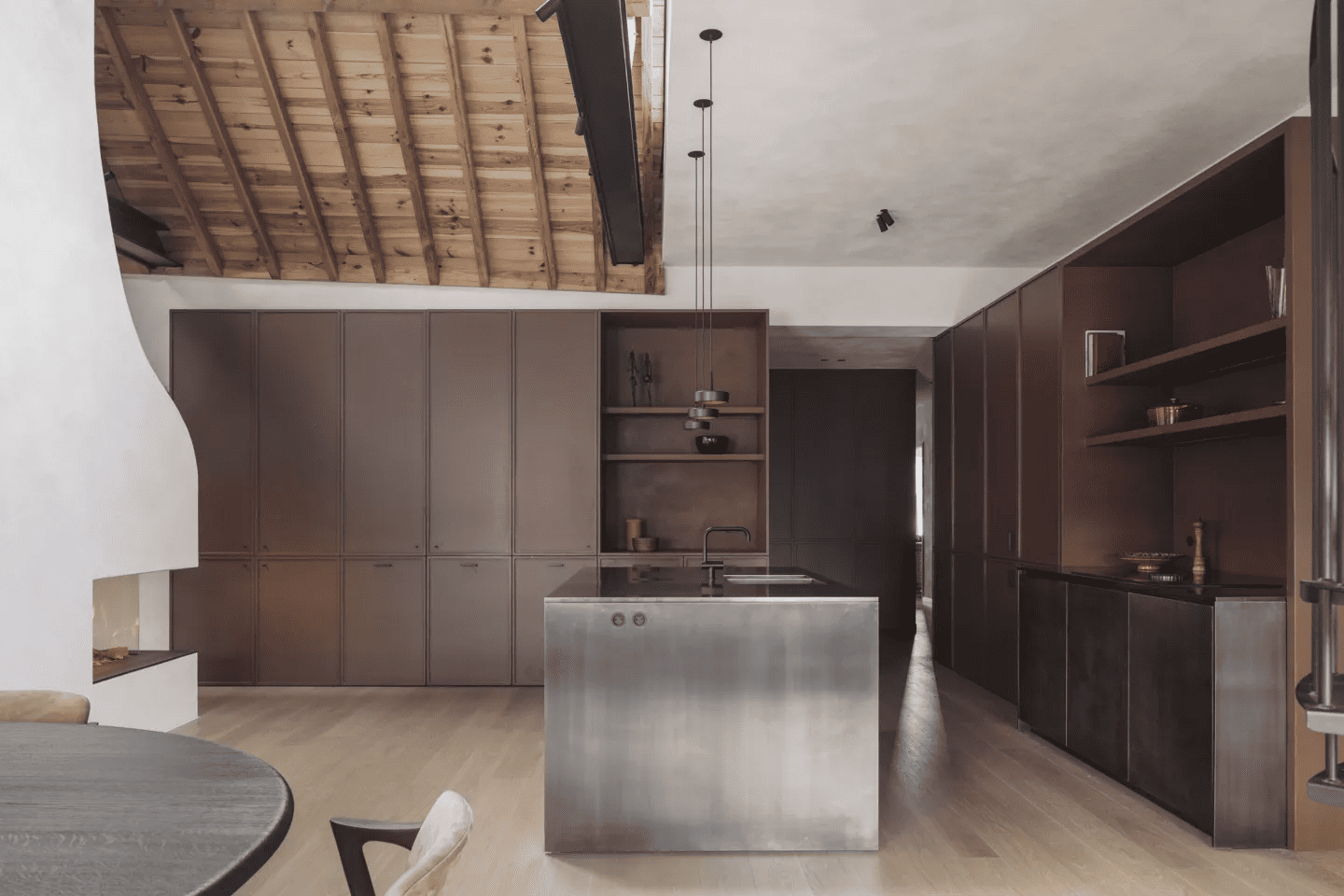
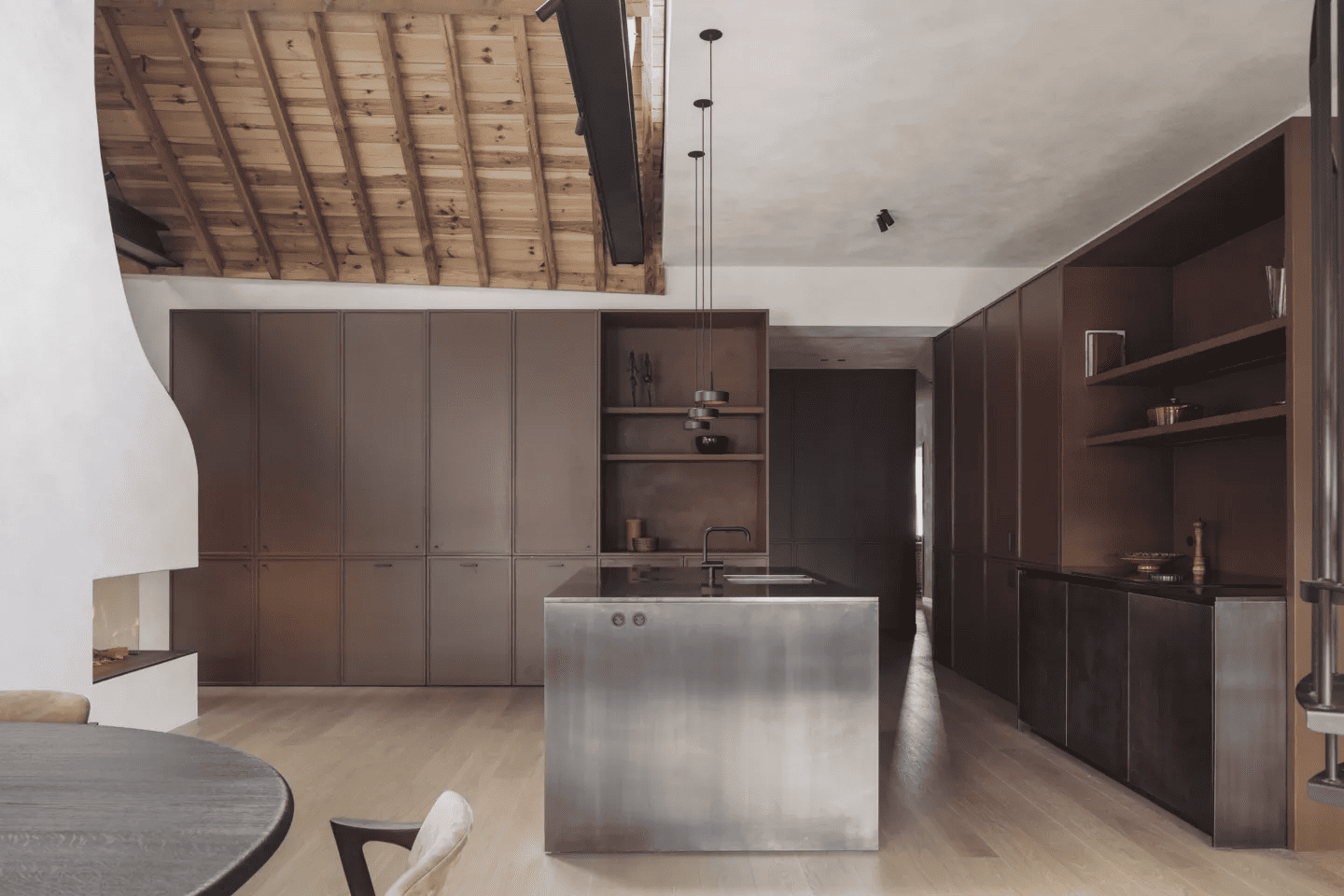
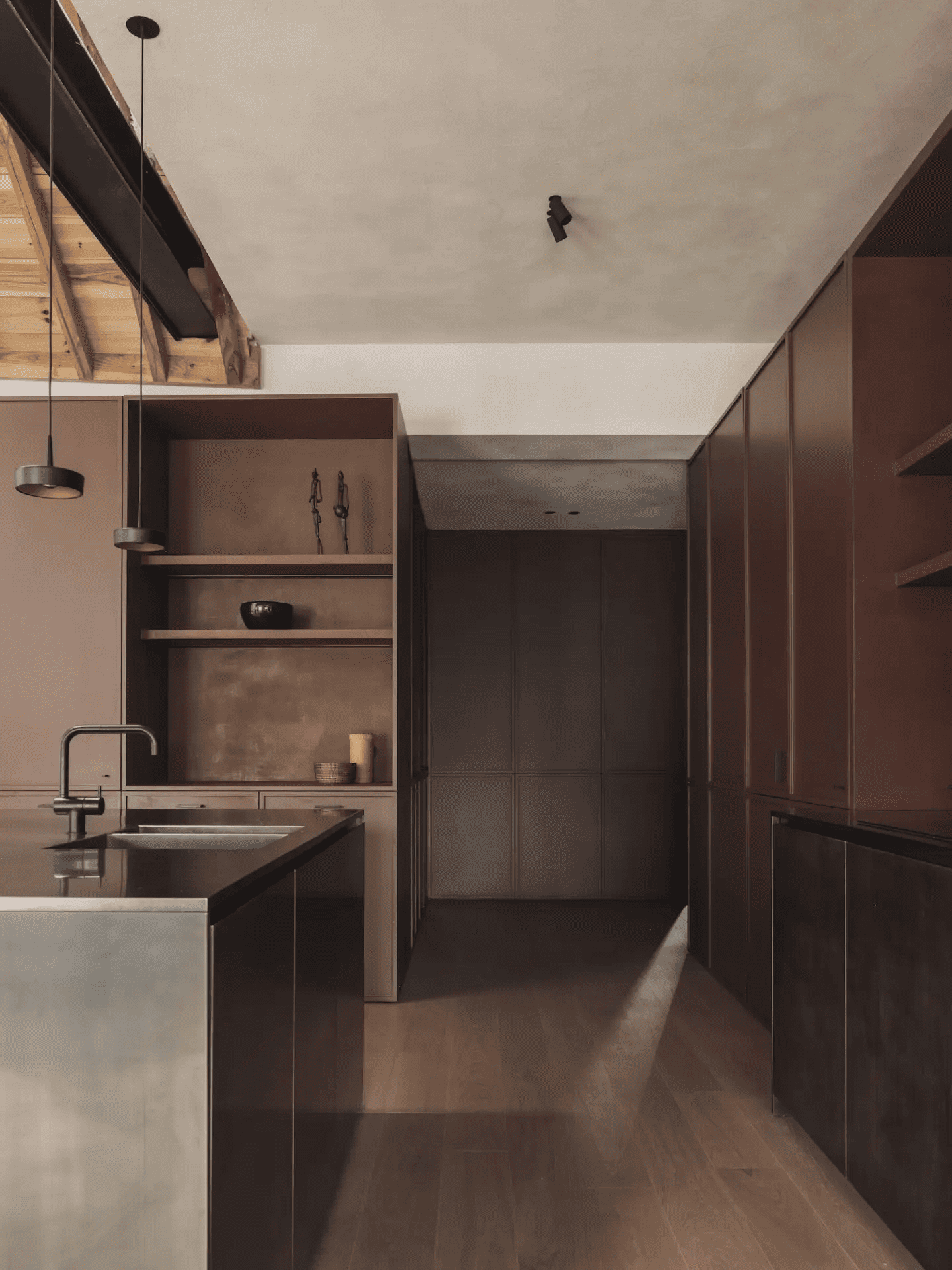
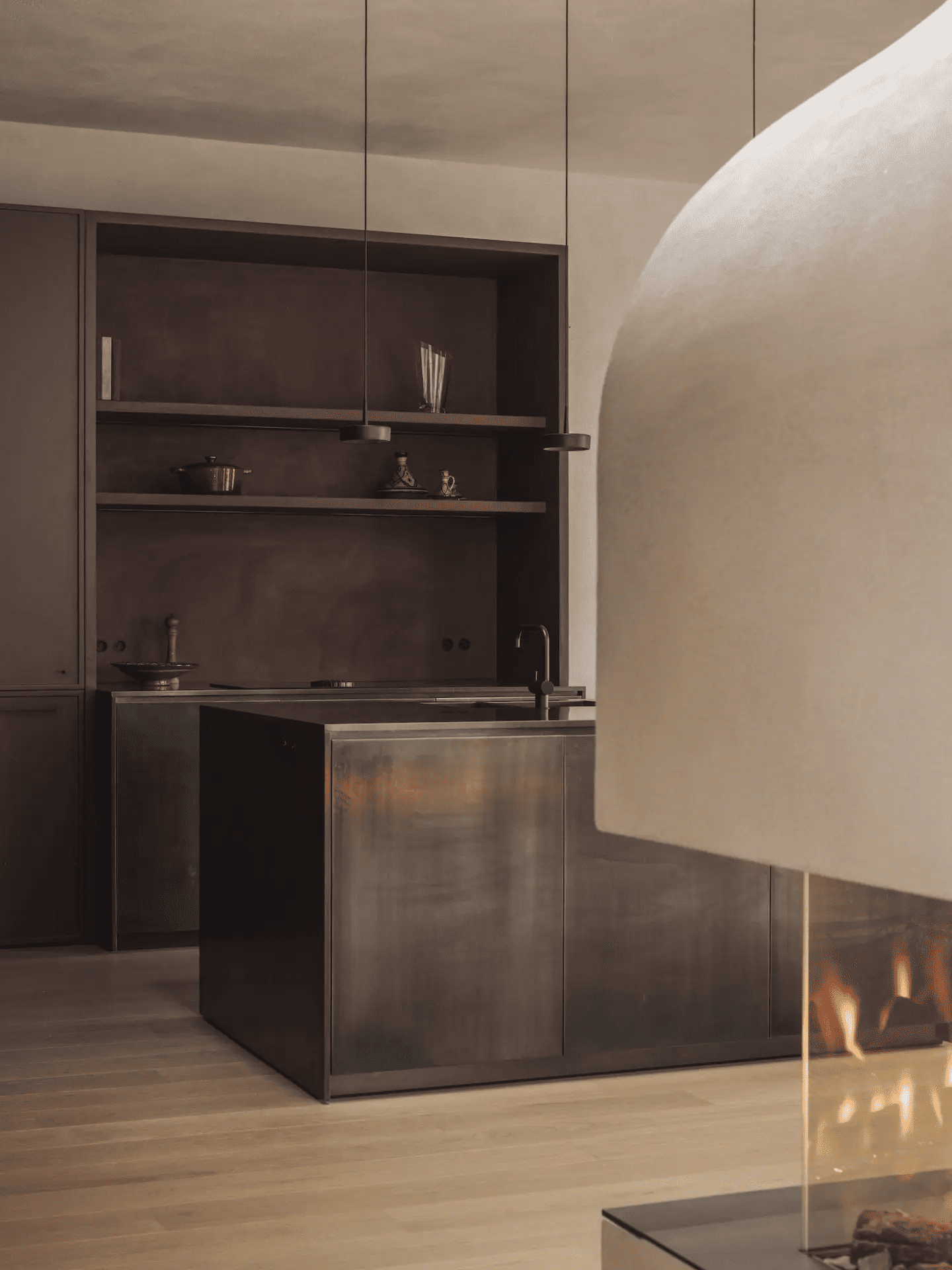
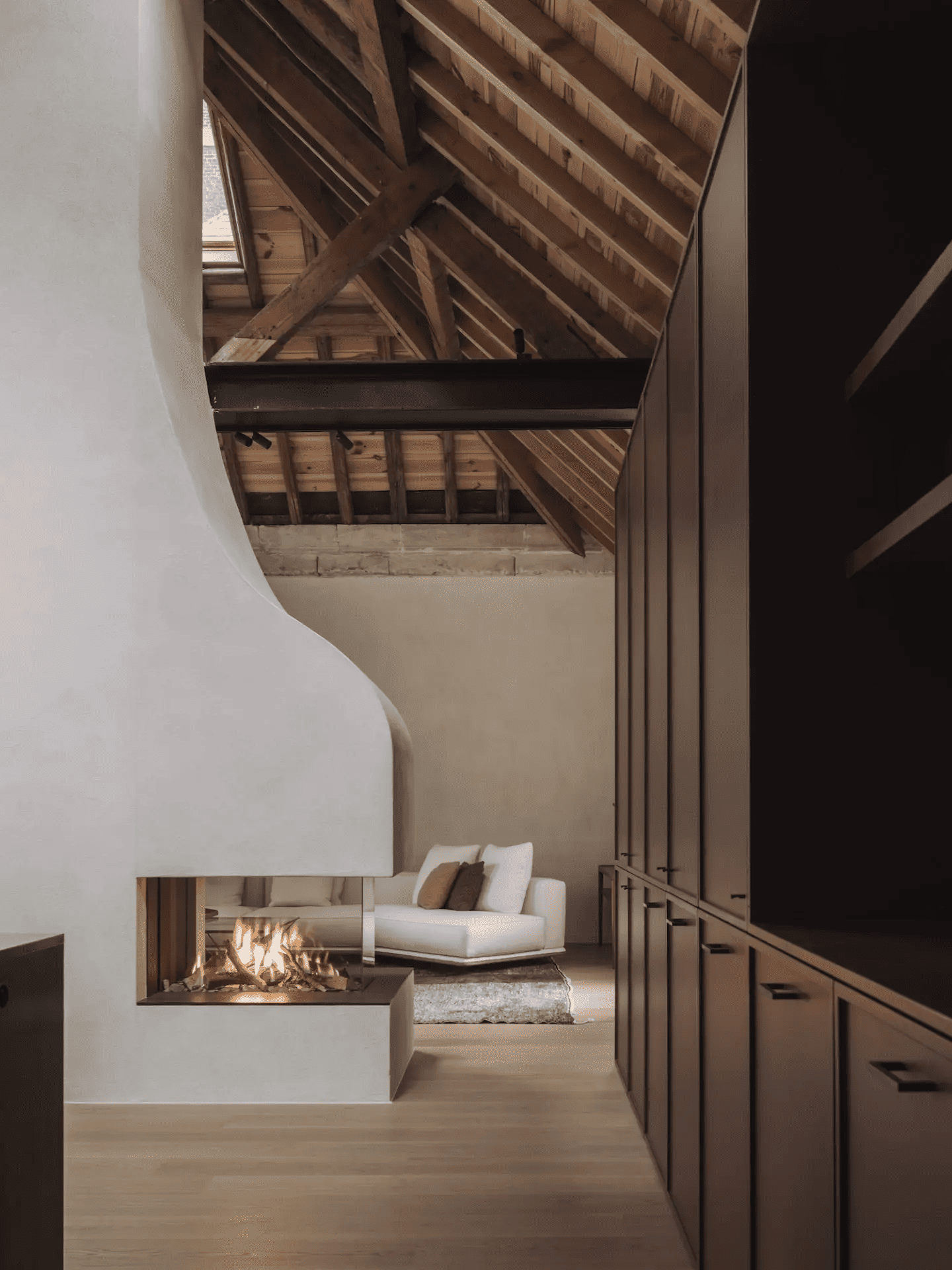
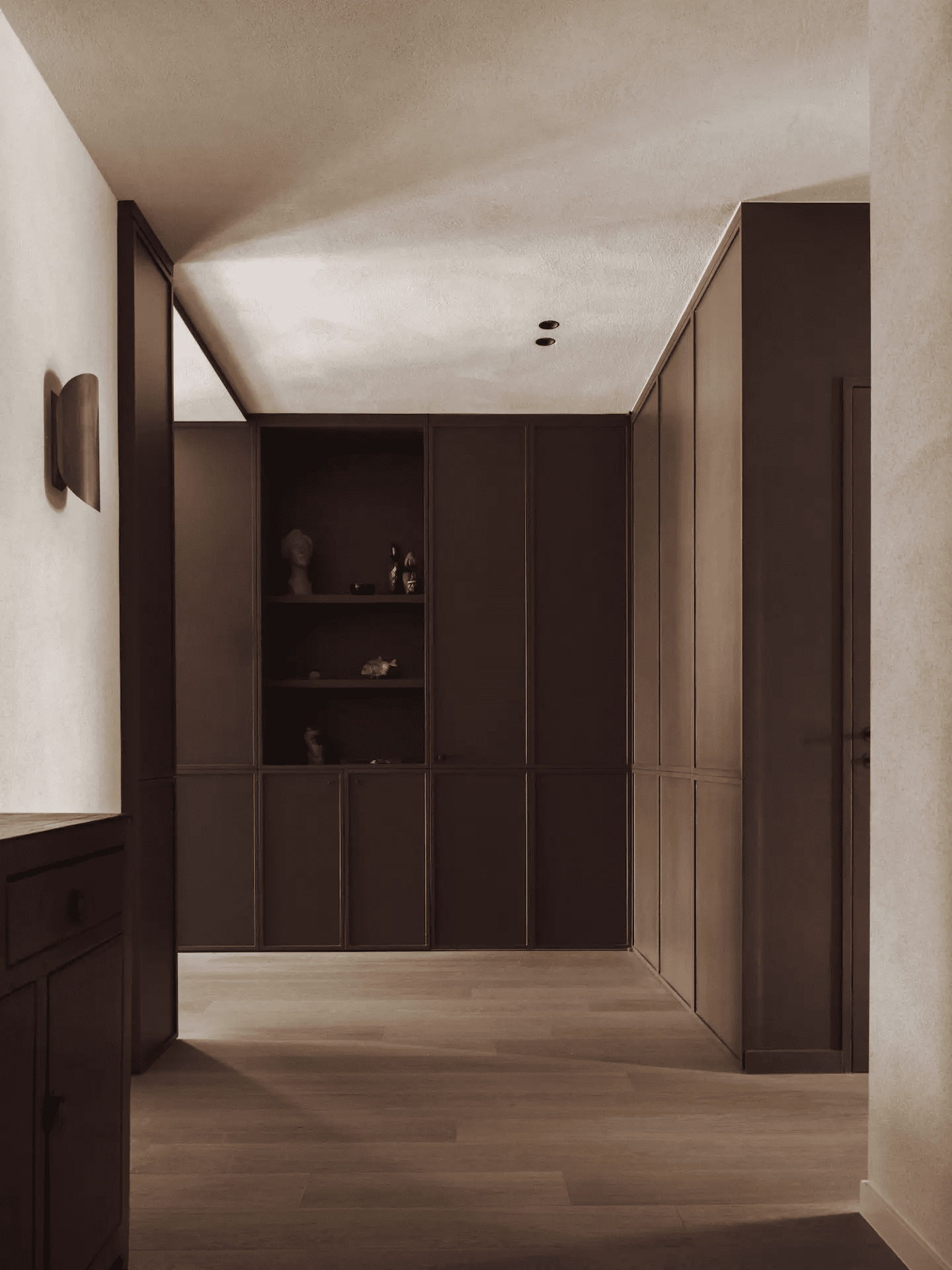
Guided by a "monochromatic palette," the lower level at the entrance revolves around a central corridor connecting various zones. The main open-plan area integrates the kitchen, living, and dining spaces, linking to an upper-level loft space that the designer envisioned as the heart of family life.
整个空间以“单色调色板”为指引,入口处的下层围绕一条中央走廊展开,并连接各个区域。而主要的开放空间则整合了厨房、客厅和用餐区,并与上层的阁楼空间相连,该空间被设计师视为家庭生活的核心。
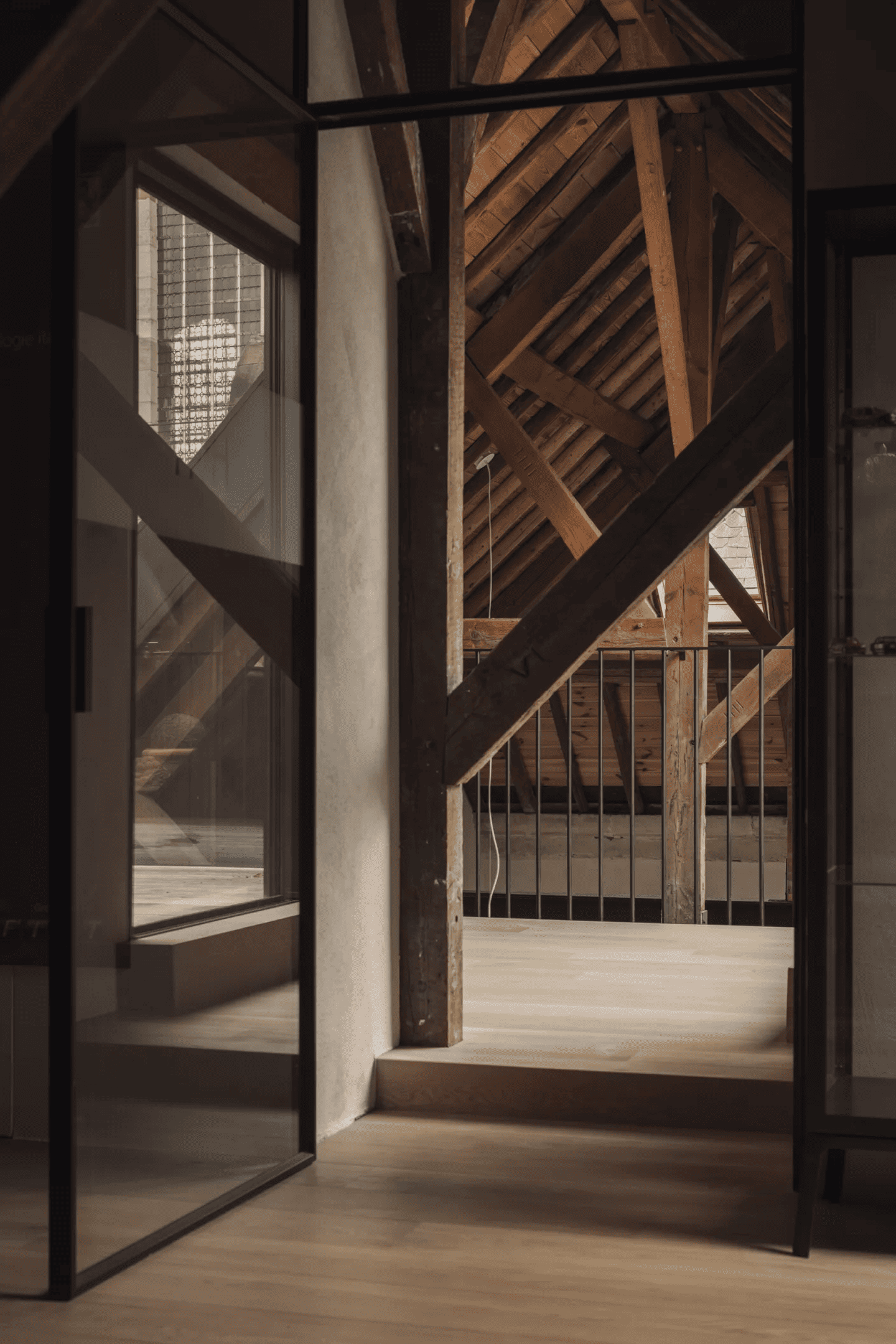
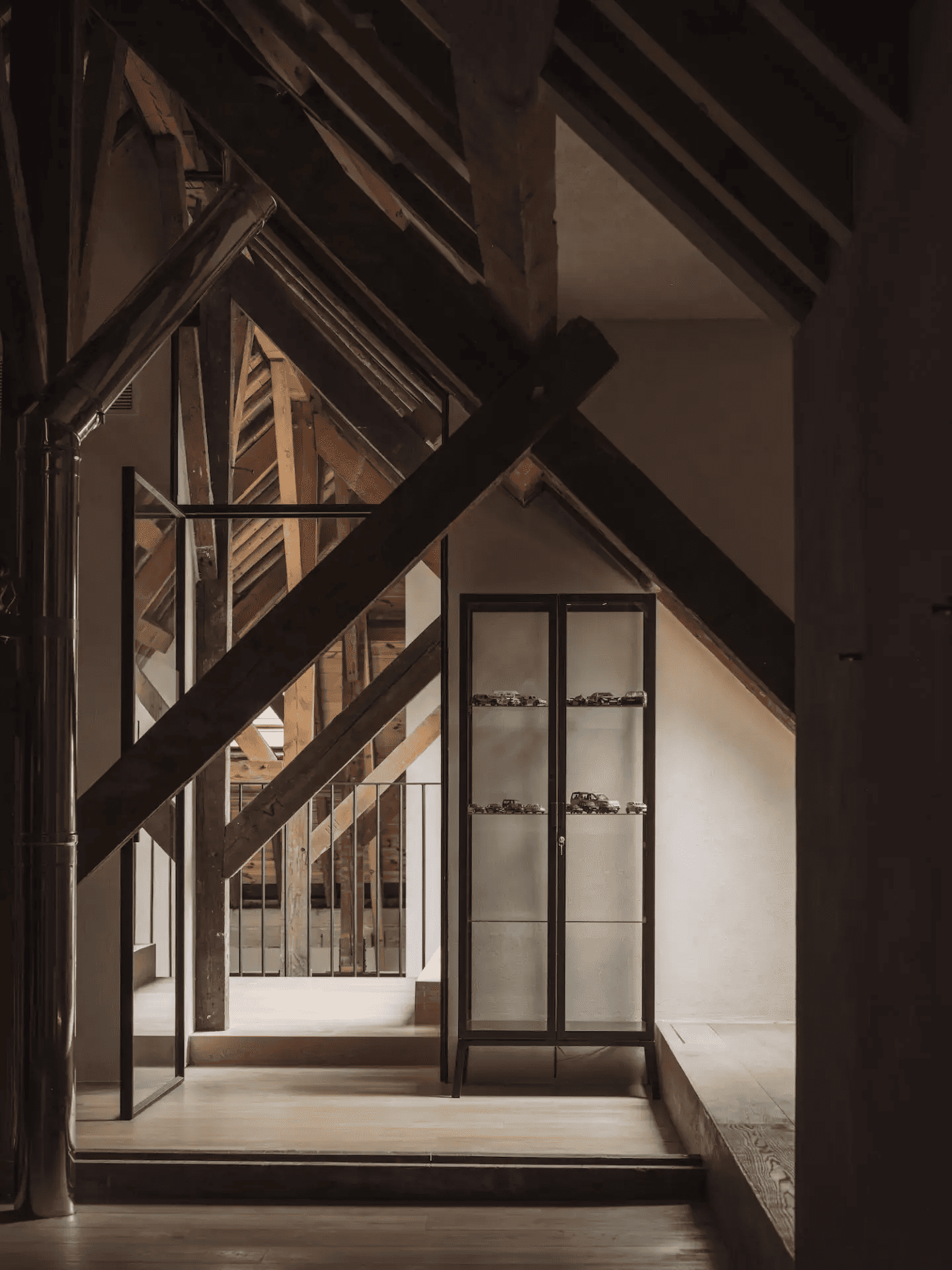
Here, the preserved original oak ceiling is particularly striking, reflecting both the owners' and the designer's respect for the building's original elements.
这里保留的原橡木天花板尤为显著,体现了业主以及设计师对建筑原始元素的尊重。
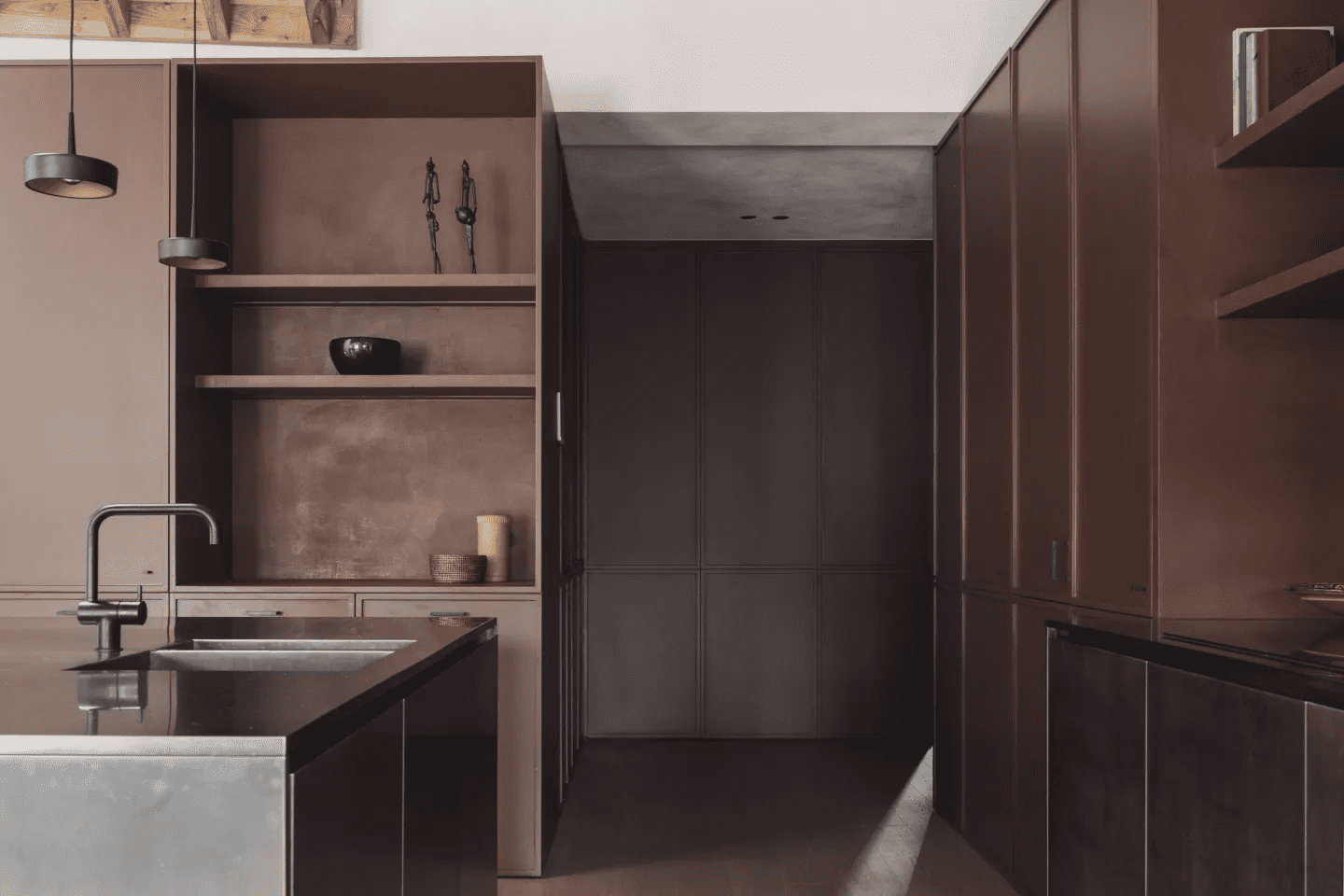
Upon this monochrome base, the designer introduced a distinct chromatic thread – a rich terracotta hue. This proposal originated from the owners' extensive travel memories, aiming to weave their personal stories and emotions into the design. Upon seeing this color, the owners immediately connected it with the African desert landscapes they had deeply explored and the ancient clay art of Asia.
单色的基底之上,设计师为空间注入了一条鲜明的色彩线索 —— 浓郁的赤陶色。这一提议源自业主丰富的旅行记忆,旨在将他们的个人故事以及情感融入设计。当看到这个色彩时,业主立即联想到他们曾深度游历的非洲沙漠景观与亚洲古老的黏土艺术。
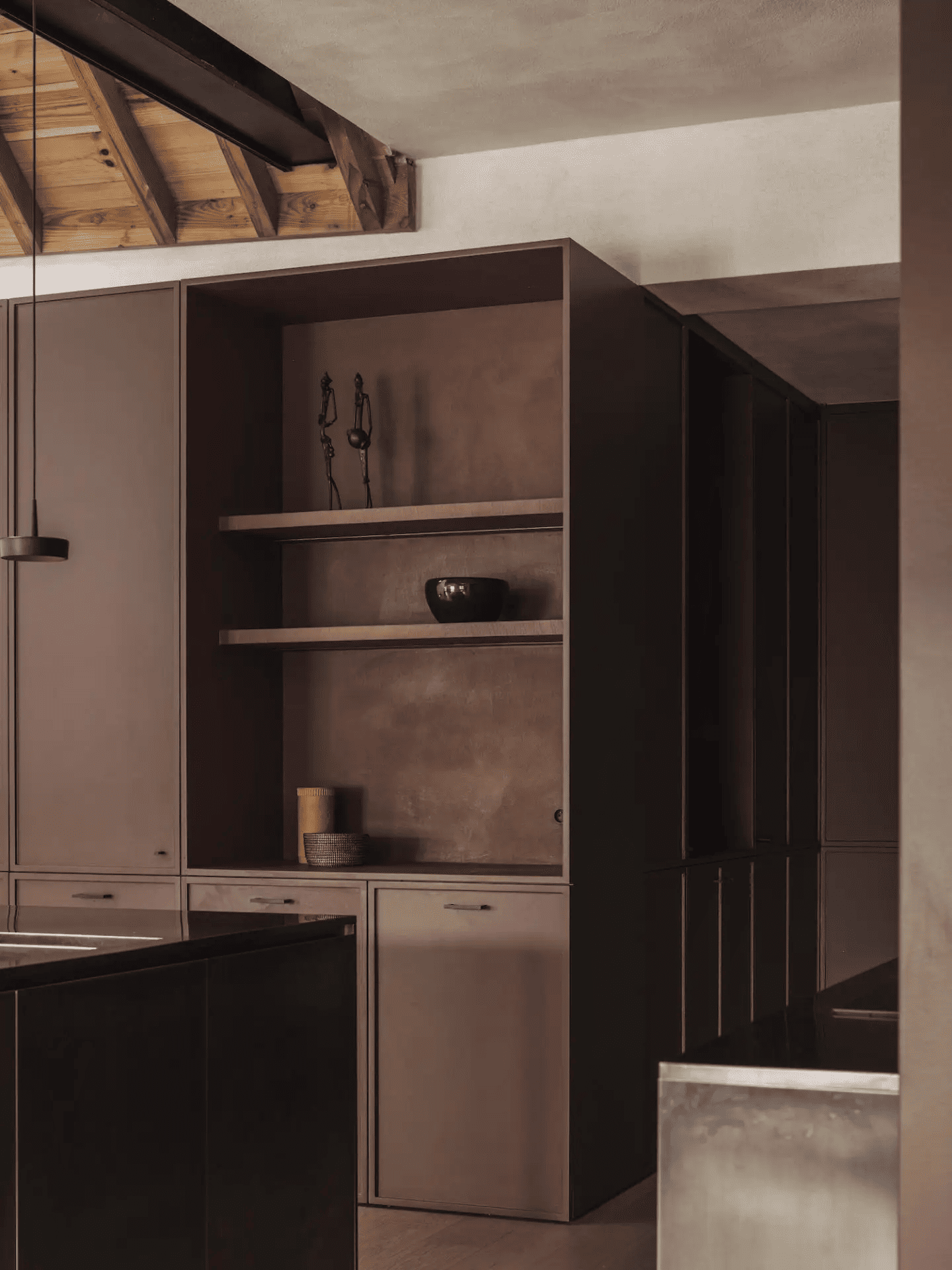
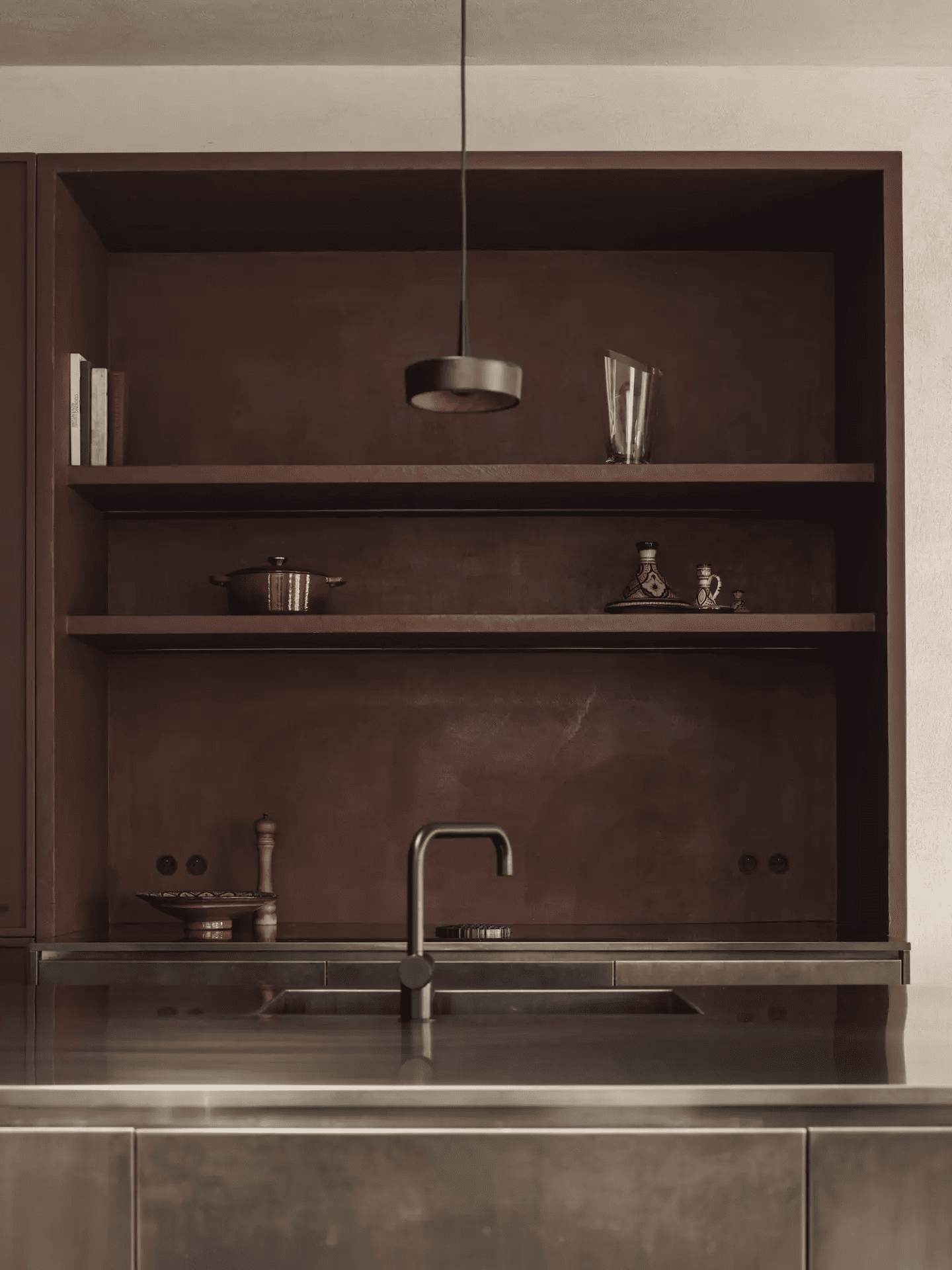
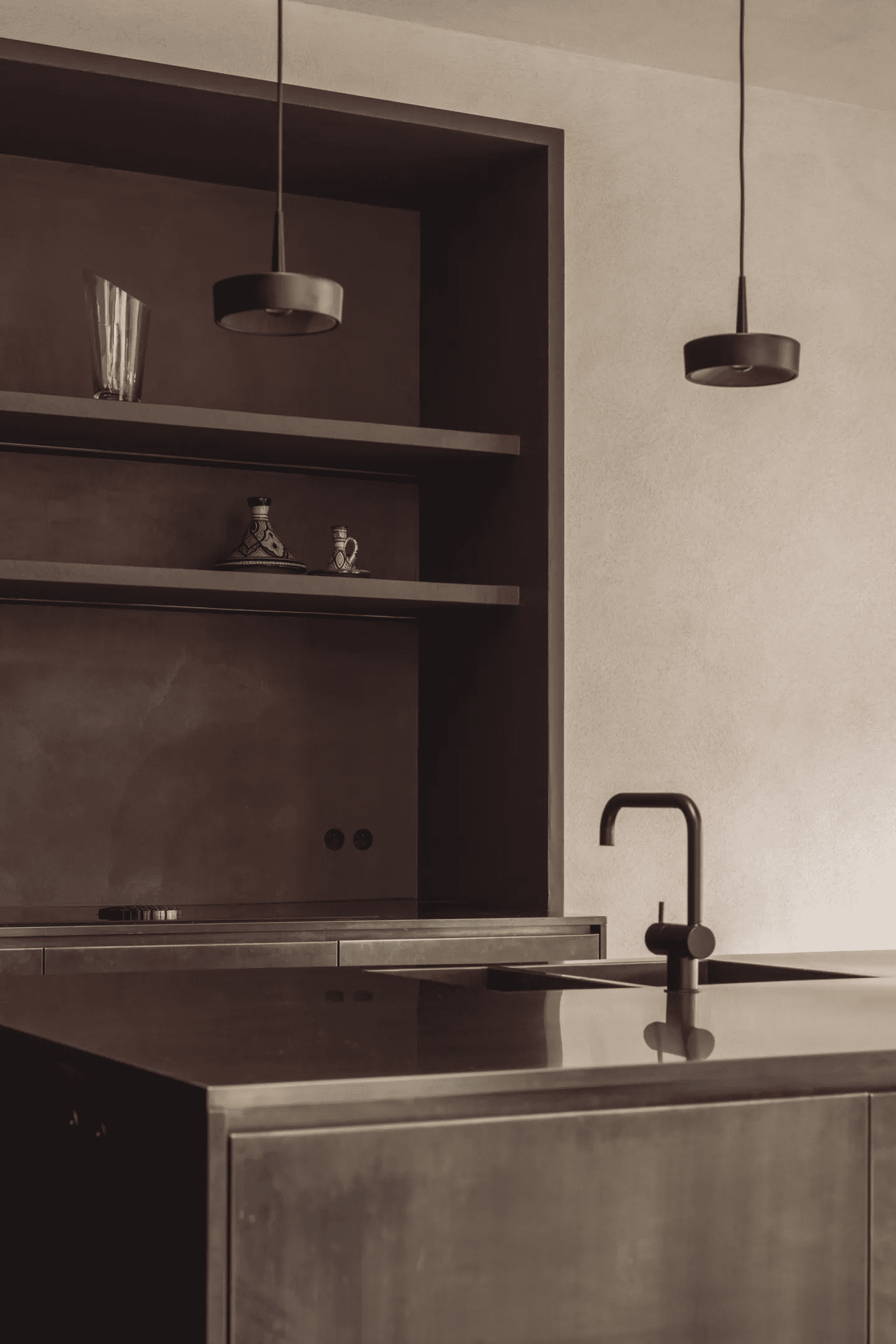
Consequently, terracotta became a key theme throughout the home, applied extensively, particularly in the joinery.
因此,赤陶色成为了贯穿全屋的关键词,尤其大量运用于木工制品中。
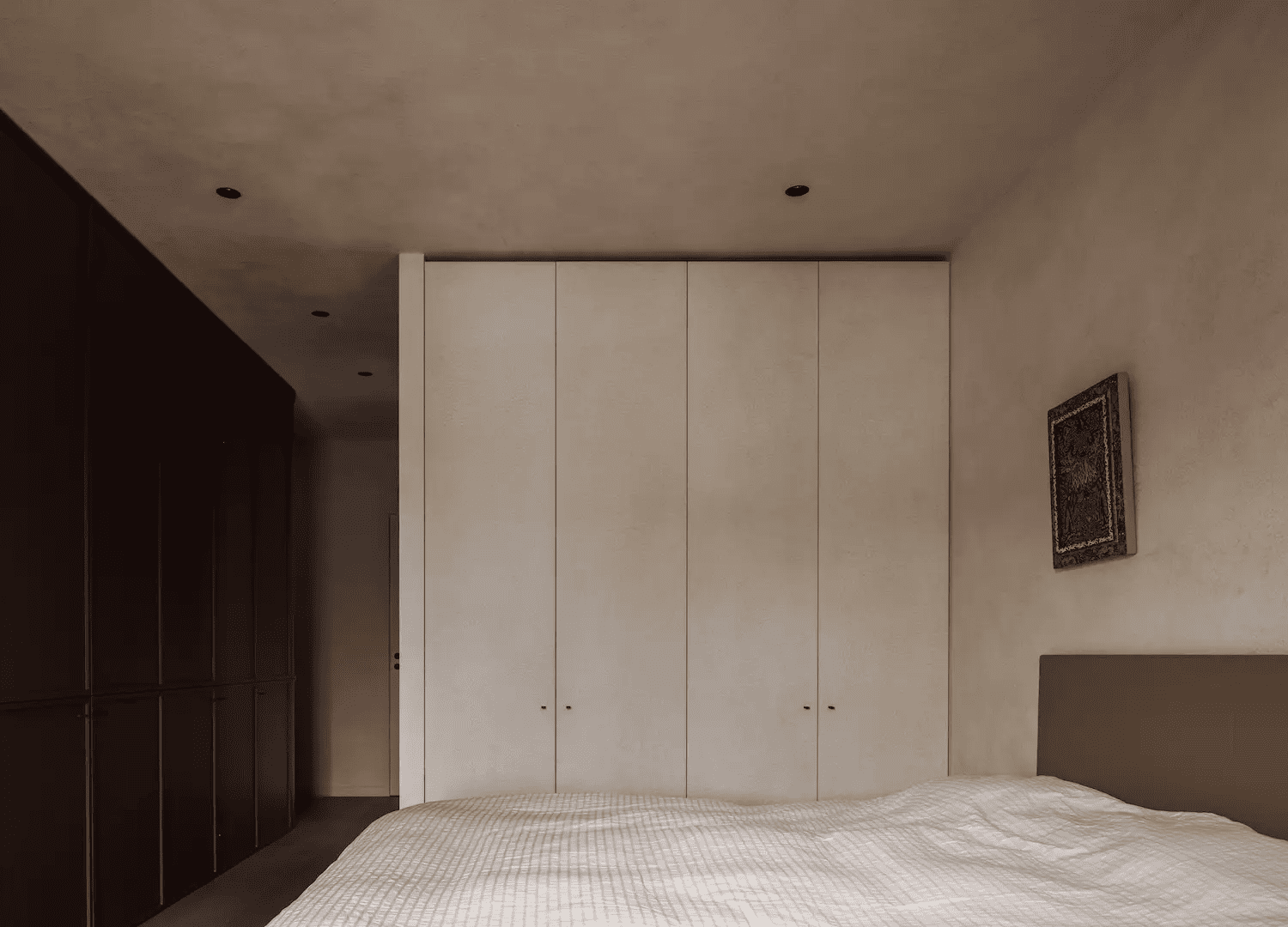
In furnishing, every piece was selected with the goal of creating a warm, comfortable, and fully functional interior, subtly complementing the extensive use of oak throughout the space, whether in the European oak flooring or the preserved ceiling.
在家具的选择上,所有单品均以营造温馨、舒适且功能完备的室内环境为准则,巧妙地衬托了空间中广泛使用的橡木元素,无论是欧洲橡木地板还是保留的天花板。
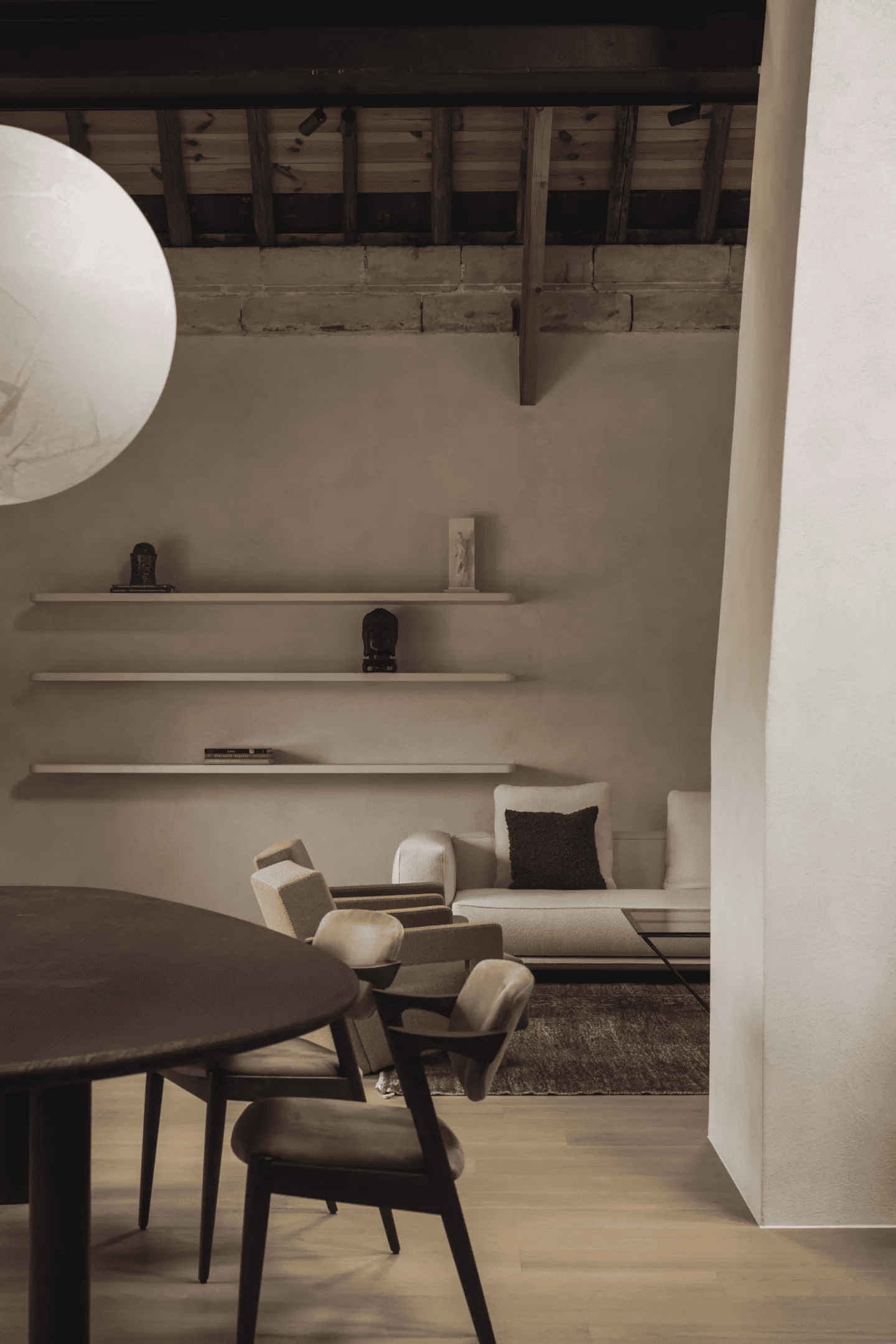
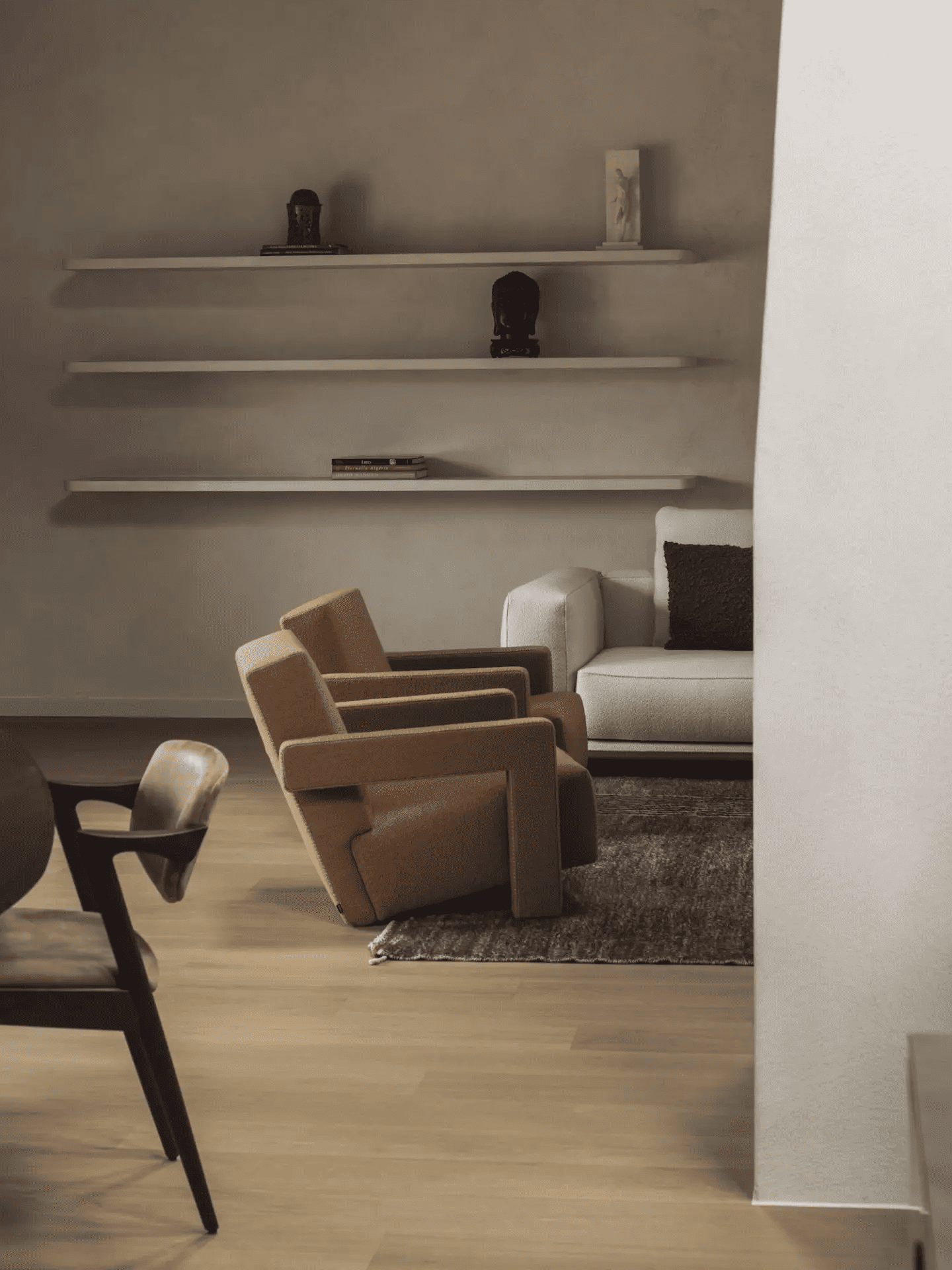
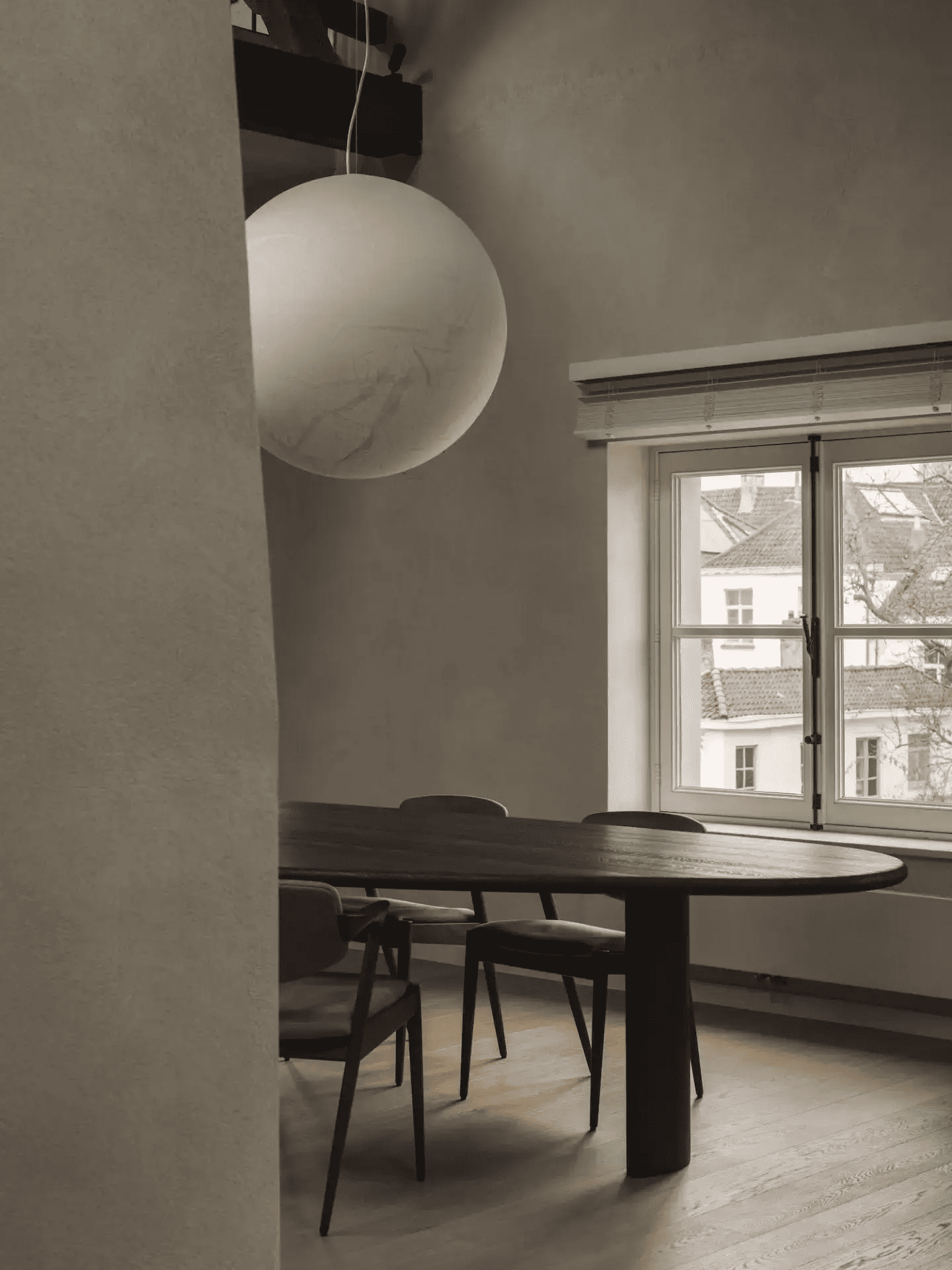
Notable furniture pieces include the walnut Miyazaki Kai chair by Kai Kristiansen, the Moon pendant lamp by Davide Groppi, and the Cassina 637 Utrecht armchair by Gerrit Thomas Rietveld.
值得注意的家具包括Kai Kristiansen设计的胡桃木Miyazaki Kai椅、Davide Groppi的Moon吊灯,以及Gerrit Thomas Rietveld设计的Cassina 637 Utrecht扶手椅。
The home's two levels are connected by a black metal spiral staircase. In the dining area, the Miyazaki Kai 42 walnut chairs, Moon pendant lamp, and Kei dining table by Marlieke van Rossum complement each other harmoniously.
住宅的两层由一座黑色金属螺旋楼梯连接。在餐厅区域,Miyazaki Kai的42胡桃木椅、Moon吊灯与Marlieke van Rossum设计的Kei餐桌相得益彰。
The designer has reserved space in every room to display the owners' art collection or sculptures, making the home an extension of personal narratives.
设计师在每一个房间都预留了展示业主艺术收藏或雕塑的空间,让家成为个人故事的延伸。
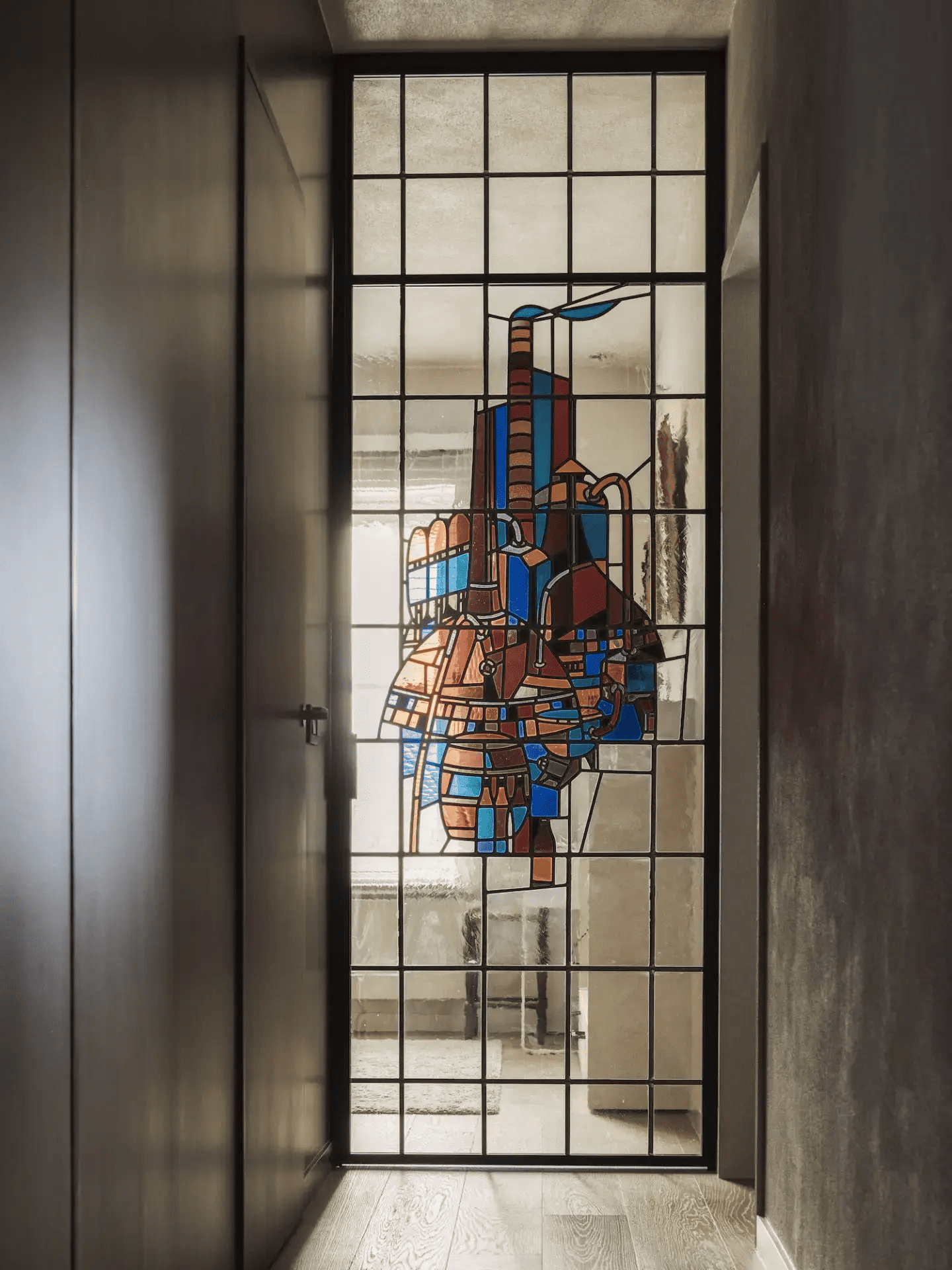
Integrating personalized elements was the deep-seated logic of the project – for example, a stained glass door, which belonged to one owner's family and has been passed down for several generations.
融合个性化元素是该项目的深层设计逻辑 —— 例如一扇彩绘玻璃门,它来自其中一位业主的家族,已传承数代。
The architect's task was to find a perfect and refined place for this artifact laden with family memories within the new home, making it a beautiful link connecting past and present.
设计师的任务就是为这件承载家庭记忆的艺术品在新家中找到一个完美而精致的位置,使其成为连接过去与现在的美丽纽带。
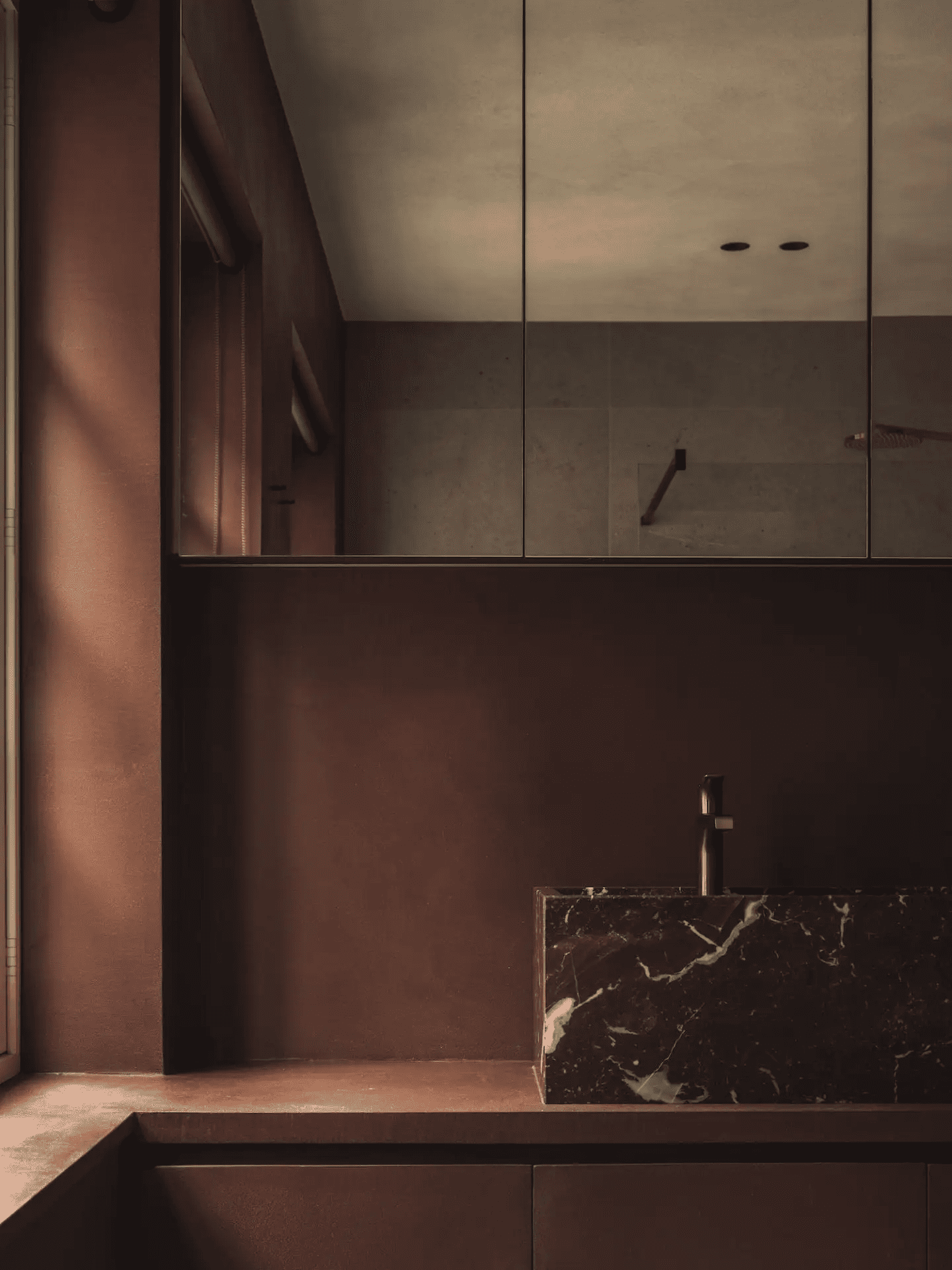
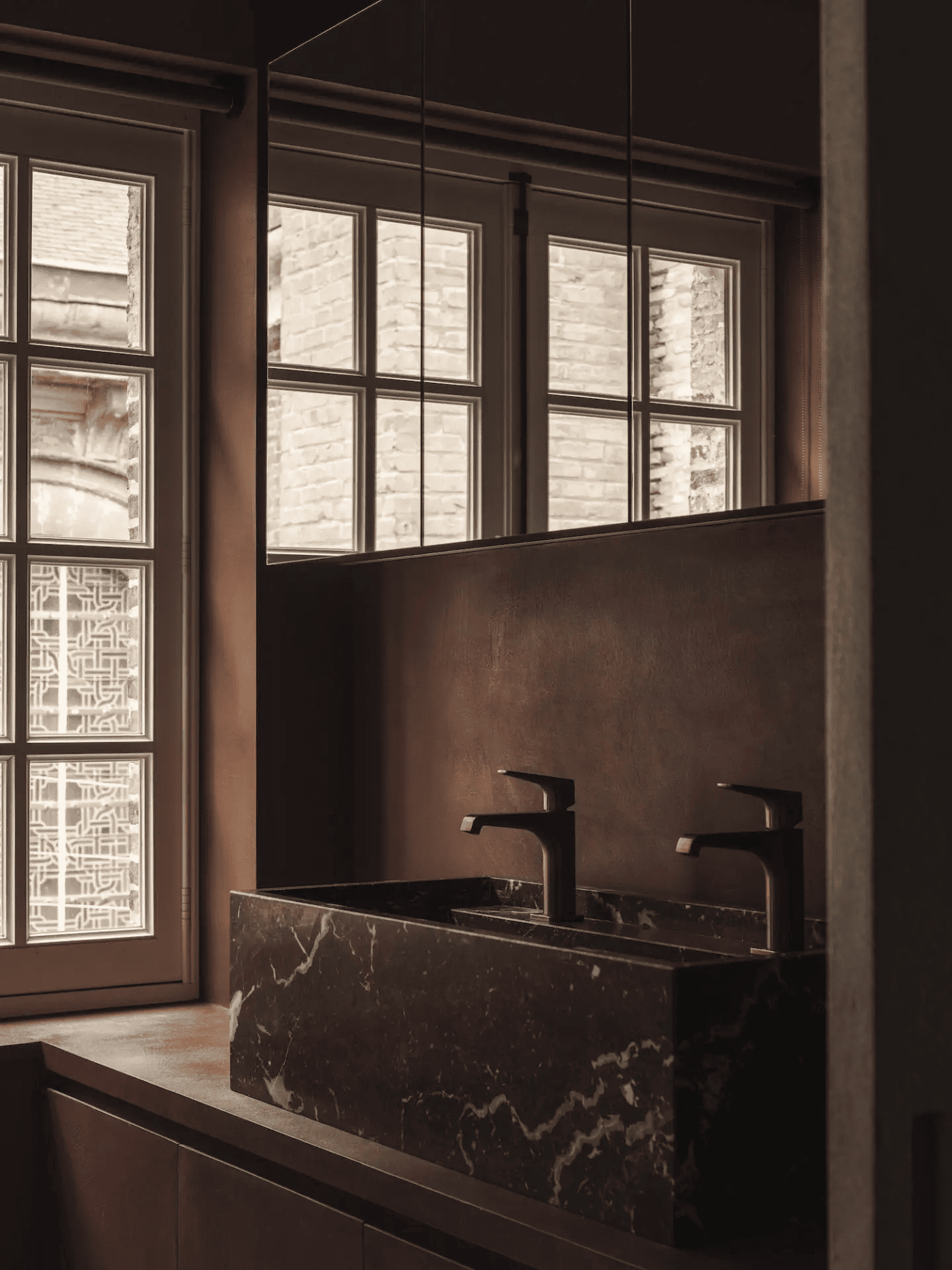
The terracotta color also underwent material translation in different areas. In the bathroom, for instance, the walls feature a complementary burgundy microcement, while the washbasin is crafted from natural polished red veined marble.
赤陶色在不同区域也经历了材料的转译。例如在浴室,墙壁采用了互补的勃艮第红微水泥,而盥洗盆则选用了天然的抛光胭脂红格纹大理石。
Although the bathroom is distinctly influenced by African and Asian aesthetics, the rest of the residence adheres more closely to a traditional Belgian "monochromatic palette."
尽管浴室明显受到非洲和亚洲的影响,但住宅的其他部分仍遵循更为传统的比利时“单色调色板”。
Ultimately, this apartment is not merely a physical dwelling but a nuanced narrative.
最终,这所公寓不仅是一个物理居所,更是一次细腻的叙事。
Through homage to original materials like oak, the chromatic translation of travel memories, and the careful placement of heirloom objects, Arjaan De Feyter has successfully transformed the gravitas of a historic mansion into an intimate haven imbued with personal warmth, perfectly suited for contemporary life.
通过对橡木等原始材质的致敬、对旅行记忆的色彩转译,以及对家族传承物件的精心安置,Arjaan De Feyter成功地将历史宅邸的厚重感,转化为契合当代生活的、充满个人温度的亲密港湾。
 Previous Post