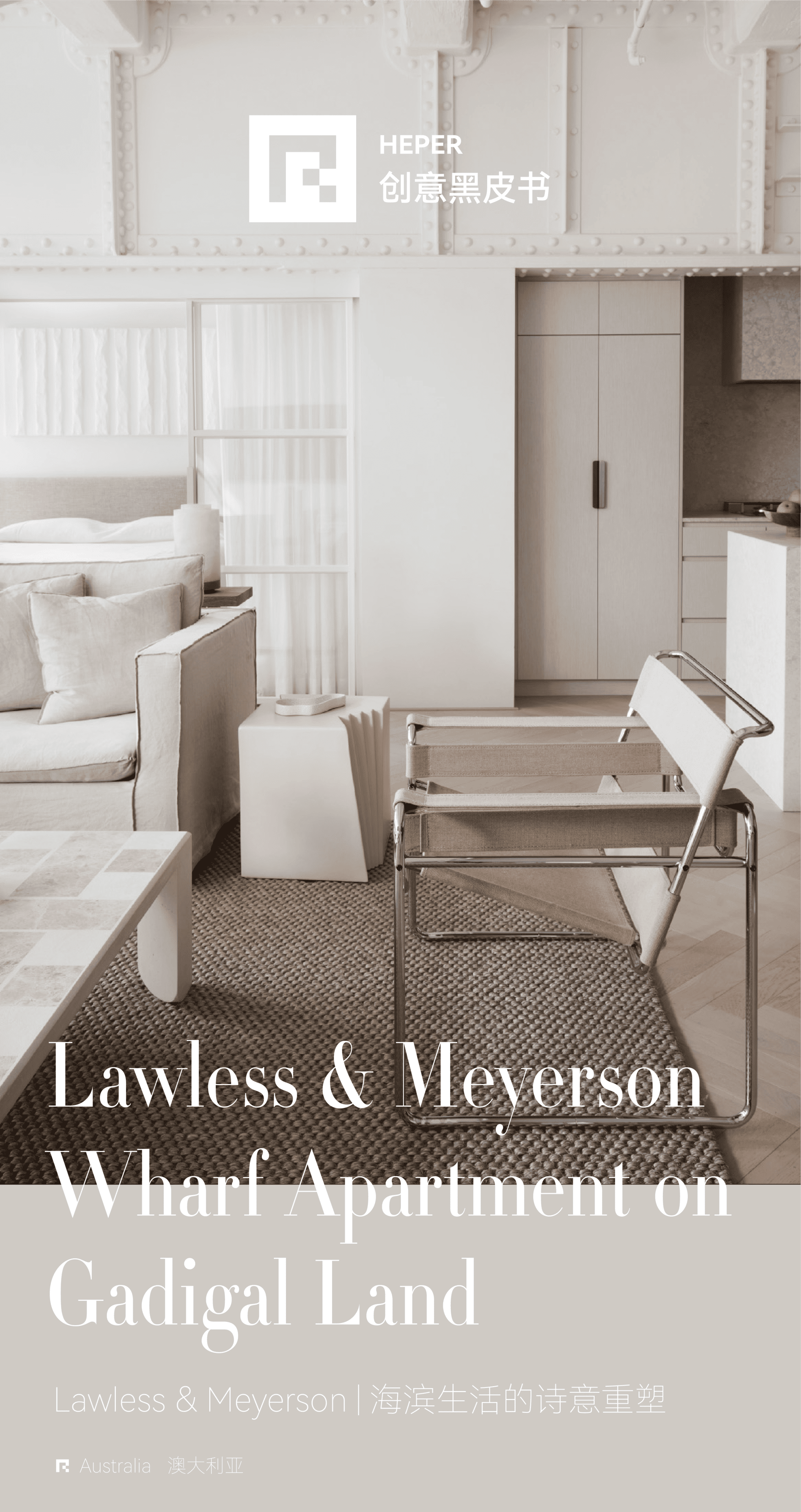
Lawless & Meyerson | 海滨生活的诗意重塑
Residential
Wharf Apartment
Australia
Lawless & Meyerson
2022
Private
Prue Ruscoe


Lawless & Meyerson | 海滨生活的诗意重塑
 Previous
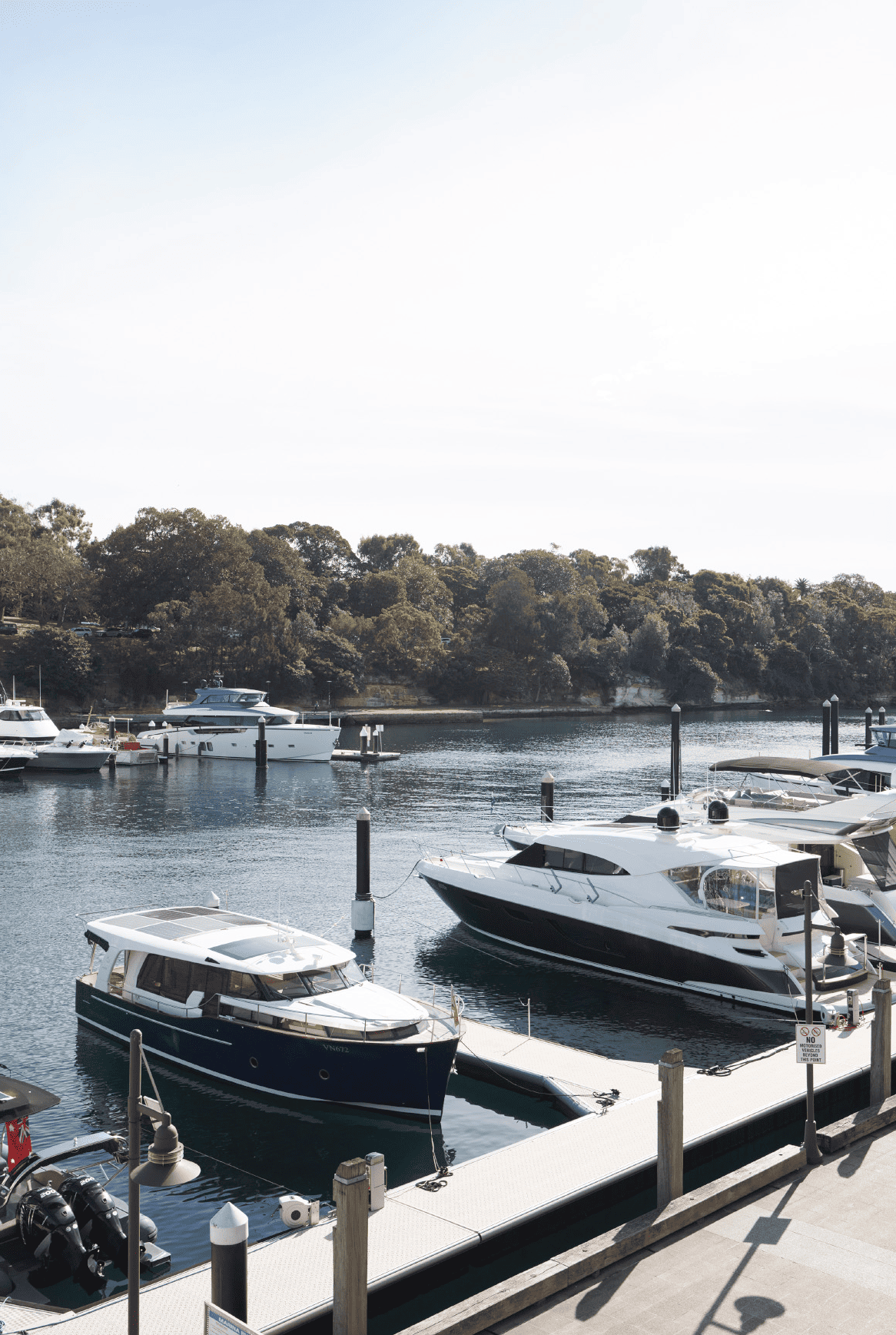
Lawless & Meyerson designed the transformation of a waterfront apartment in the Woolloomooloo finger wharf in Sydney for a young couple.
Lawless & Meyerson设计事务所受一对年轻夫妇委托,对位于悉尼Woolloomooloo码头的一处海滨公寓进行了翻新改造。
The renovation respects both the apartment building's 1990s origins and the heritage-listed wharf structure below it.
此次改造不仅尊重了公寓所在建筑建于上世纪90年代的背景,更致敬了其下方历史悠久、被列入遗产名录的码头基座。
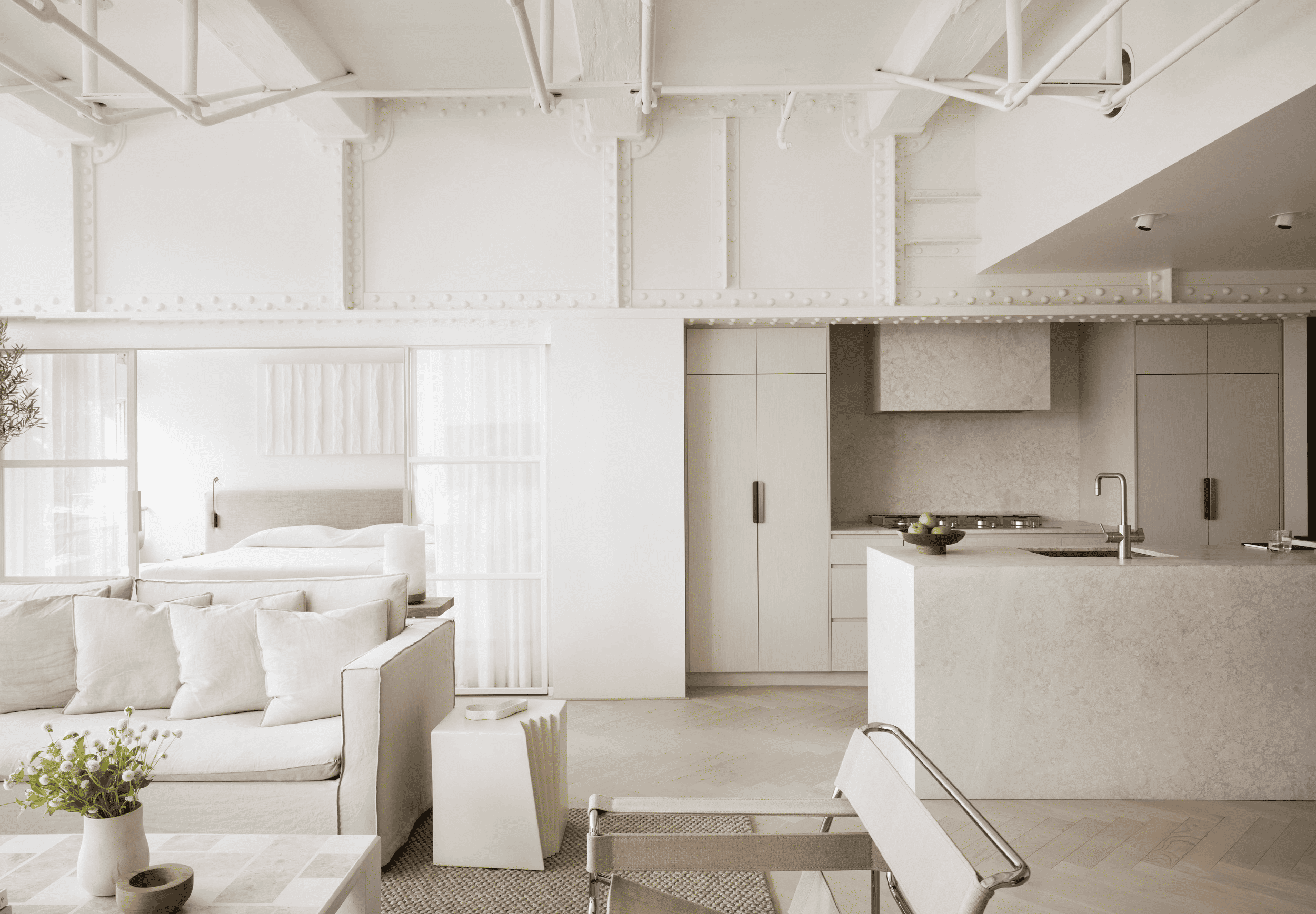
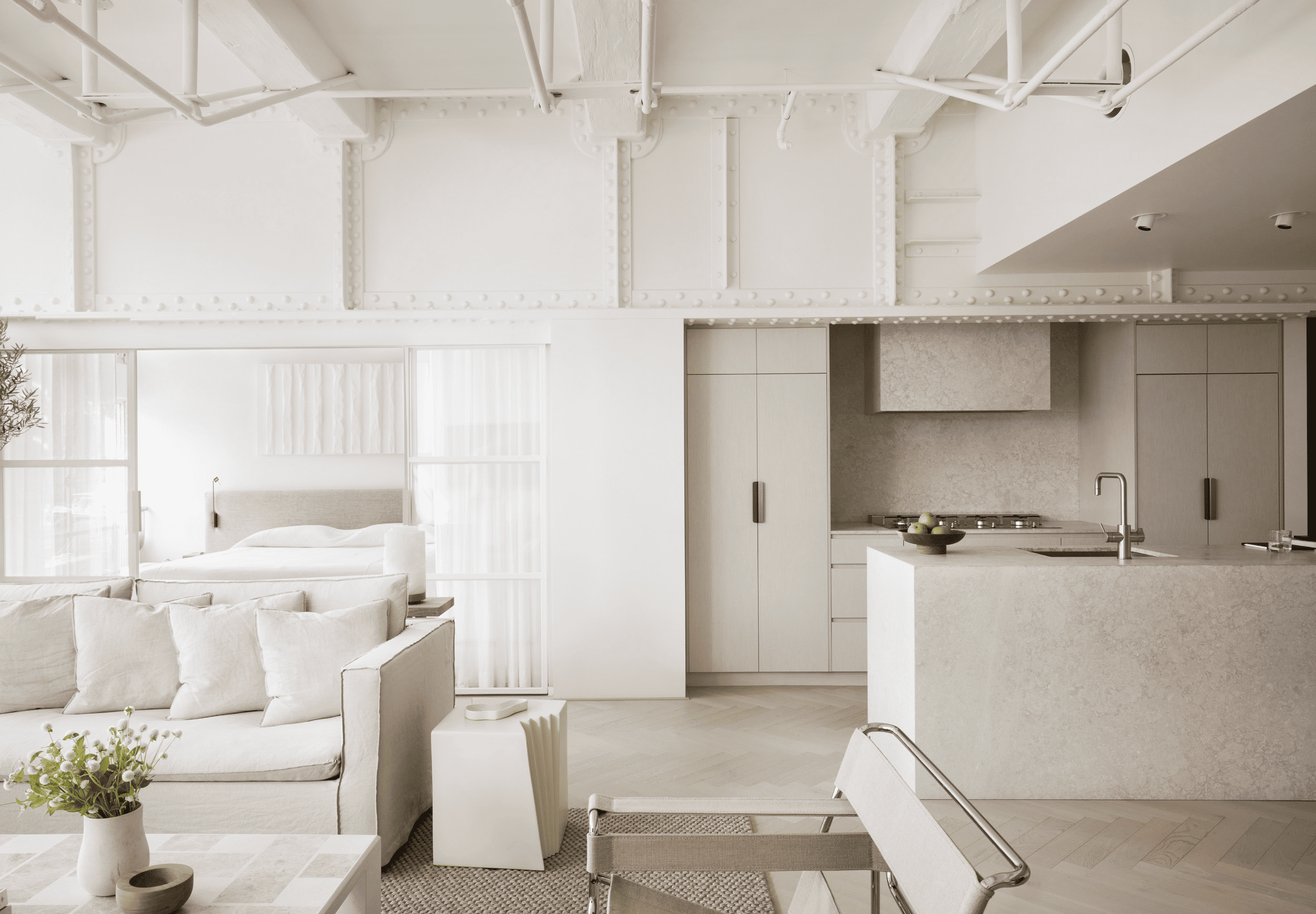
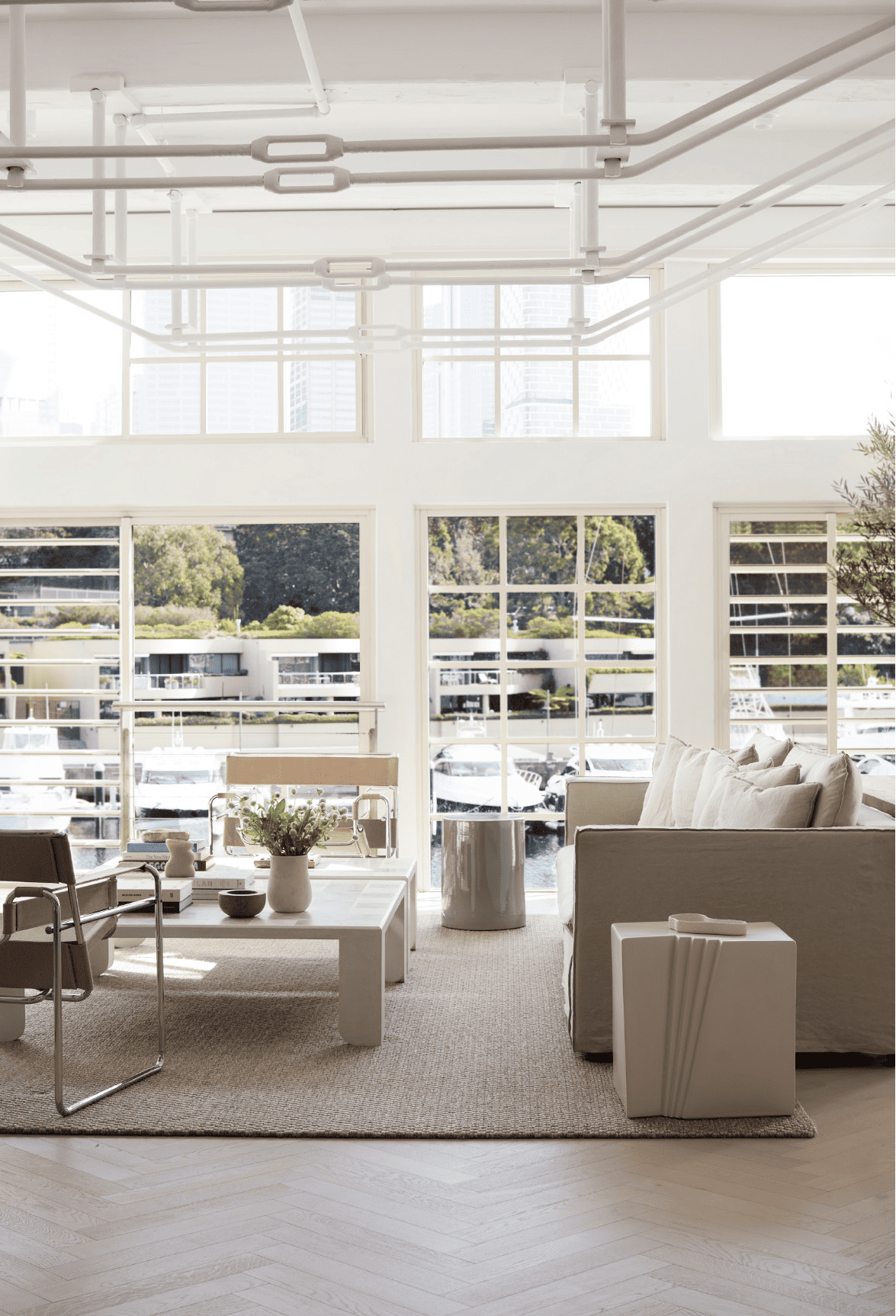
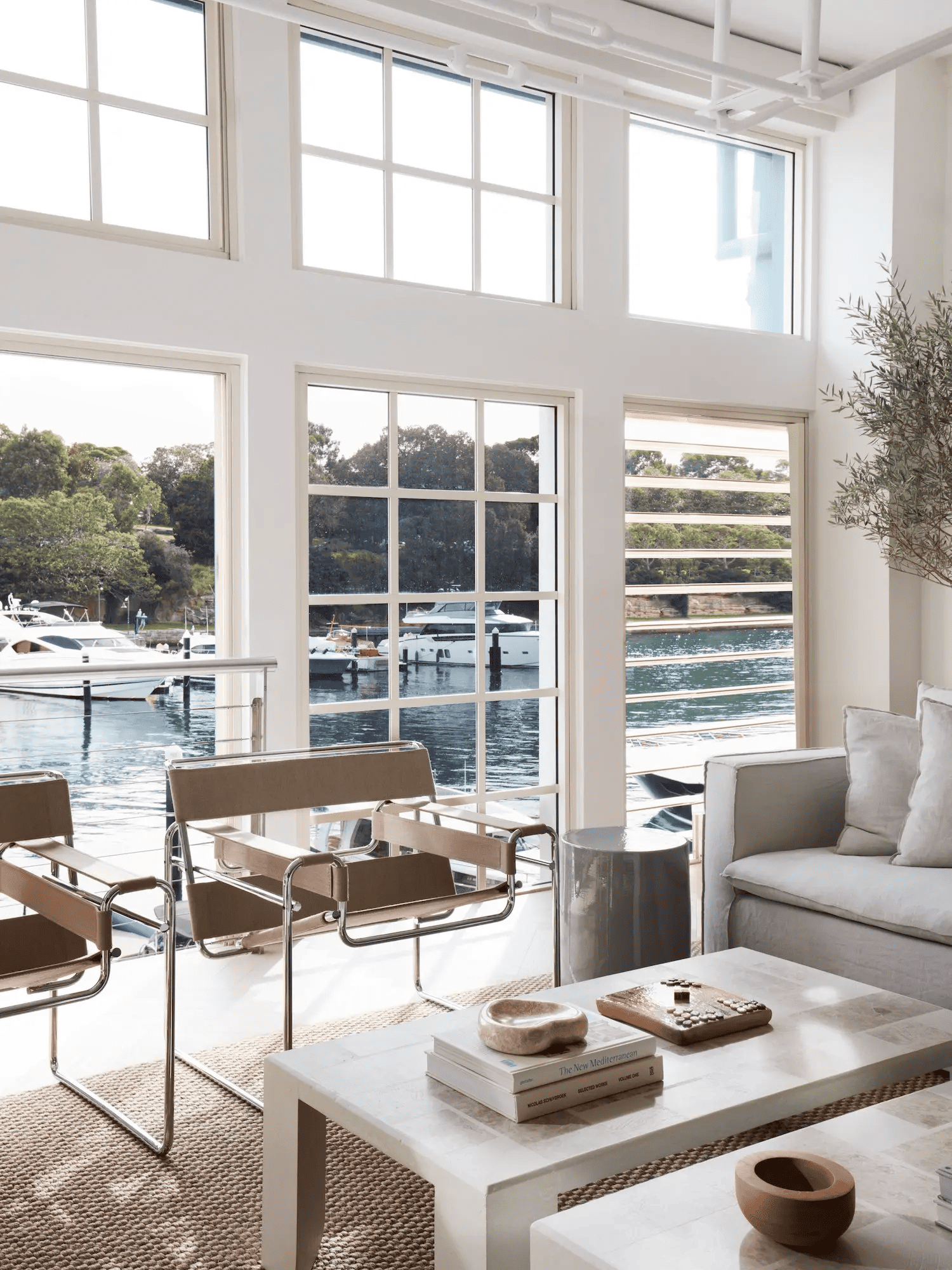
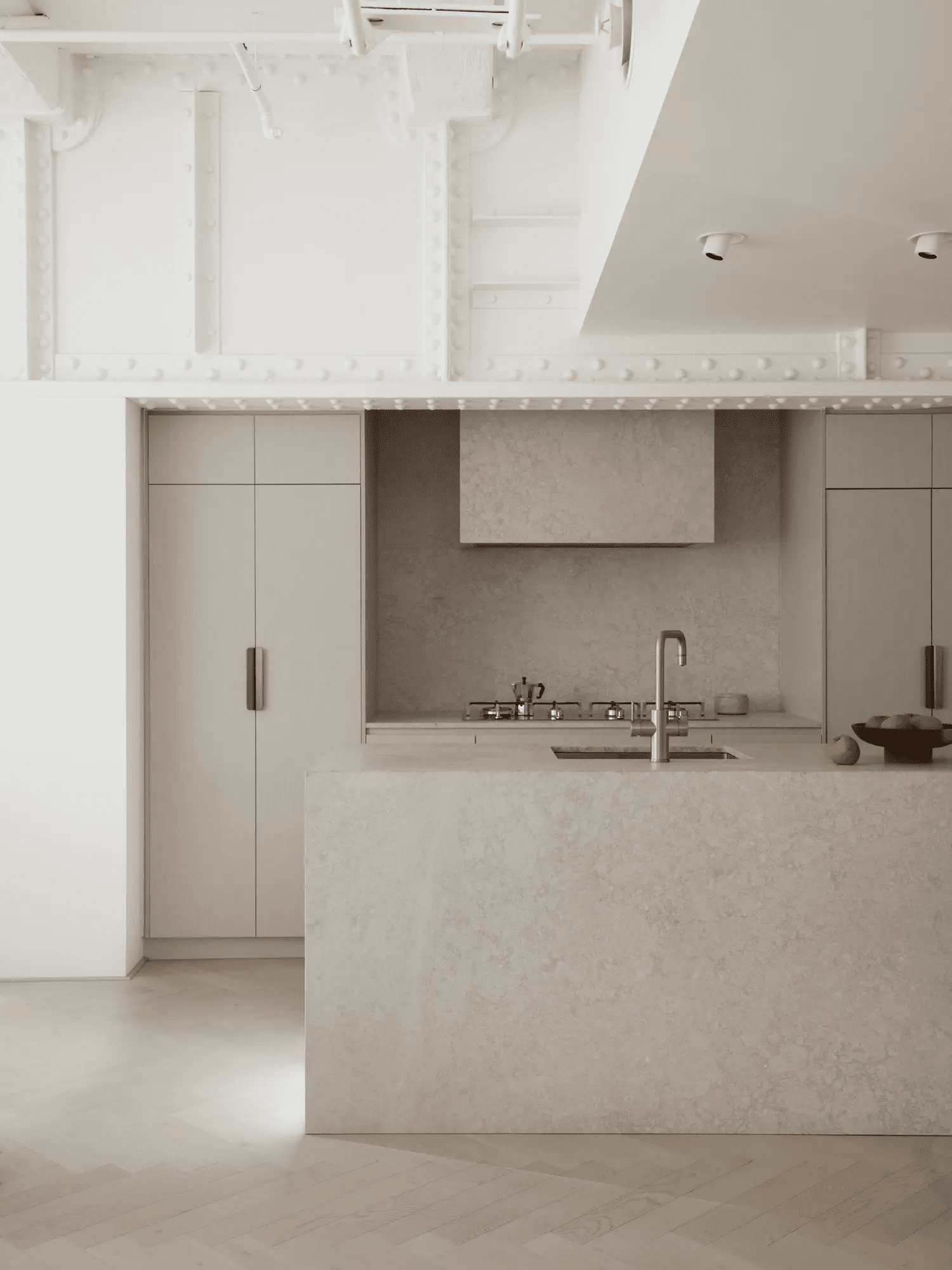
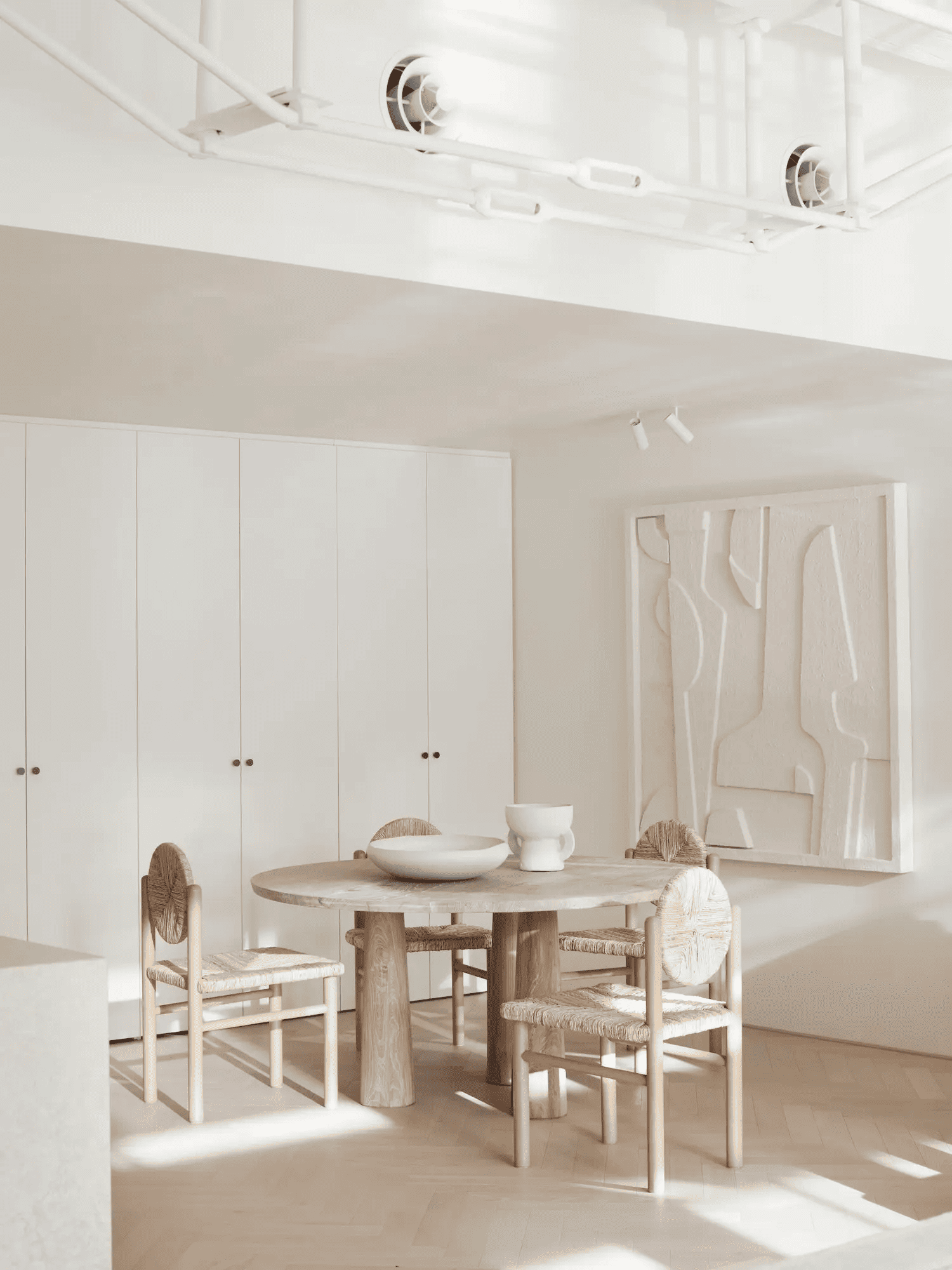
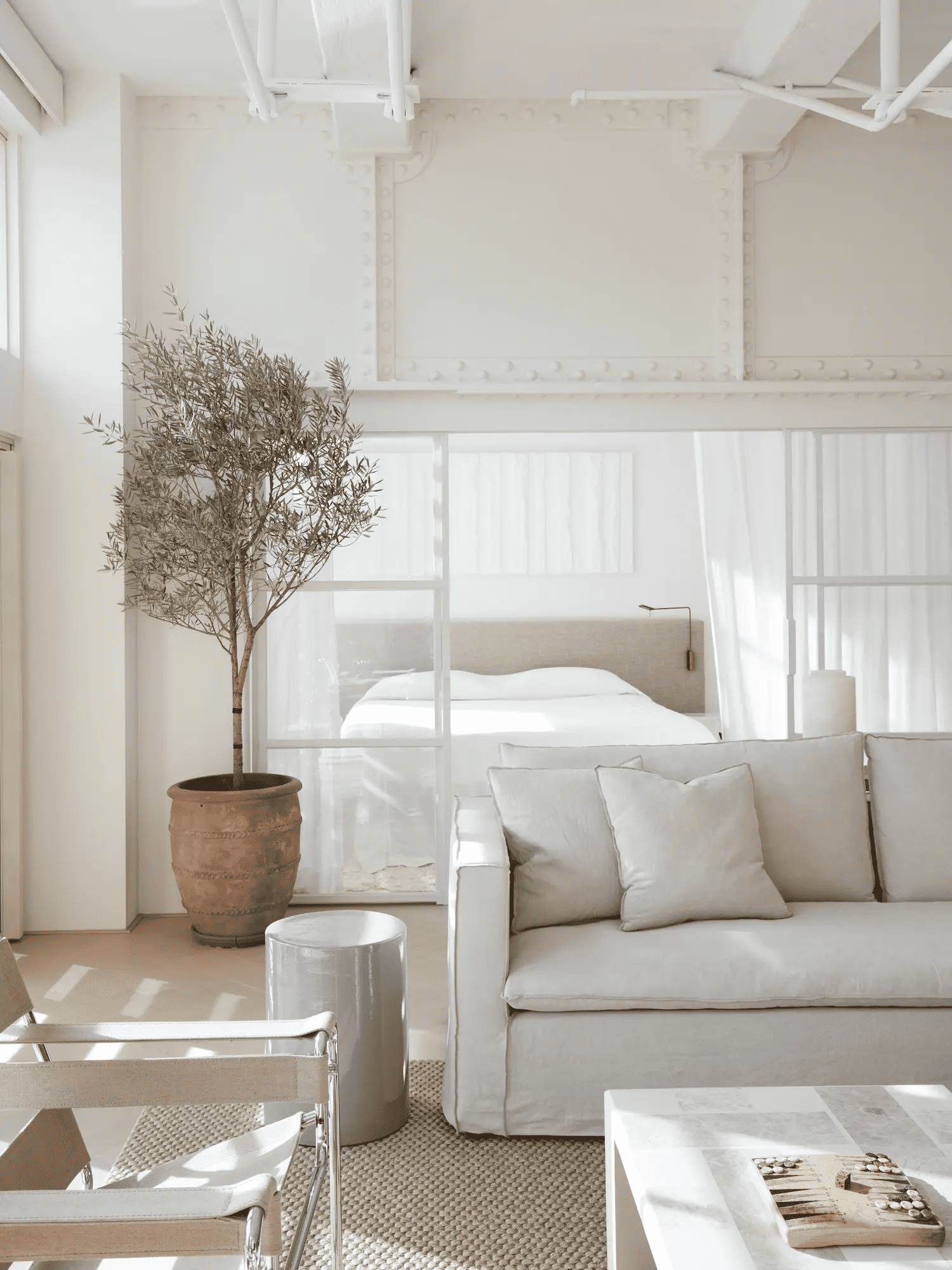
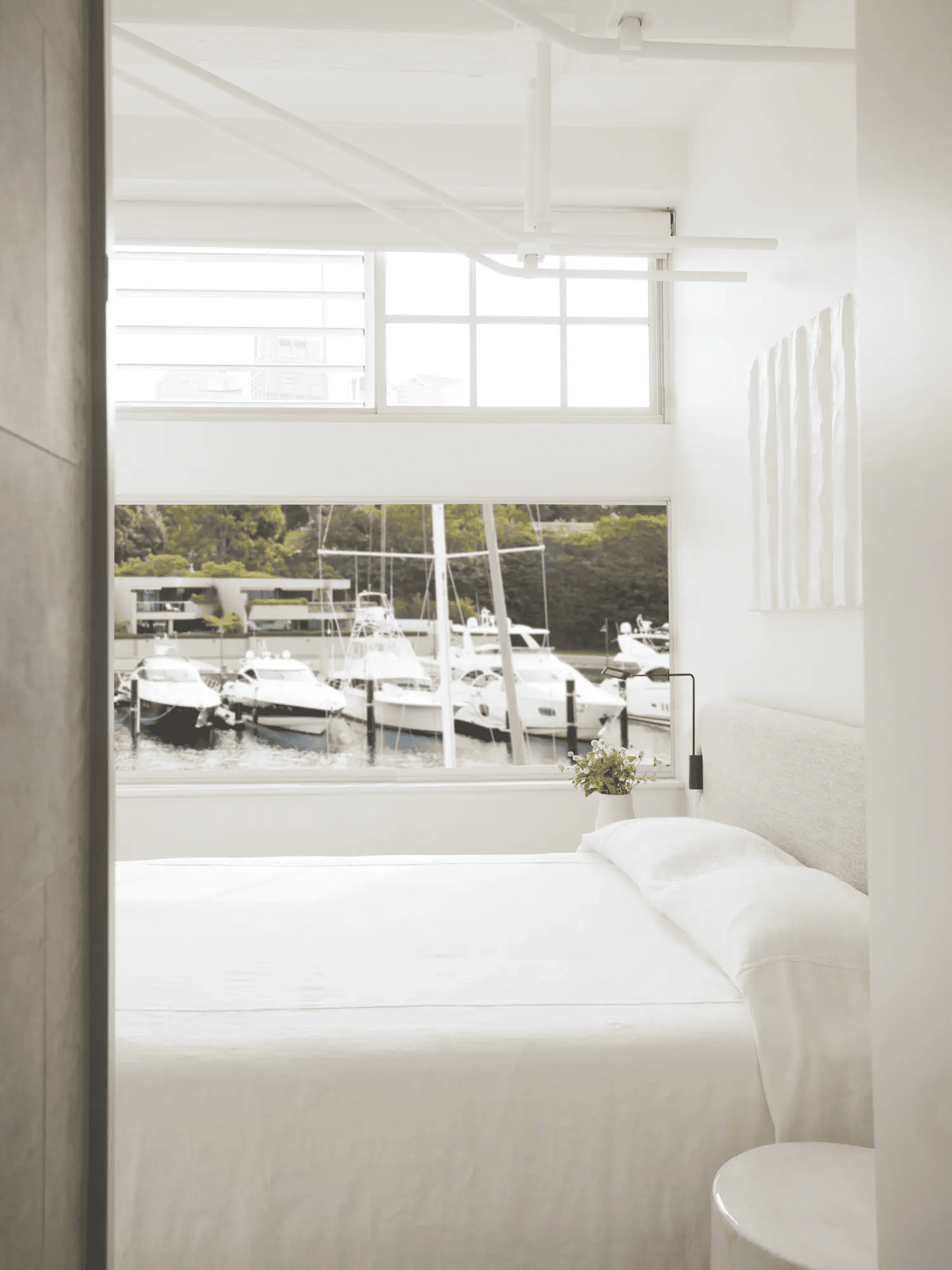
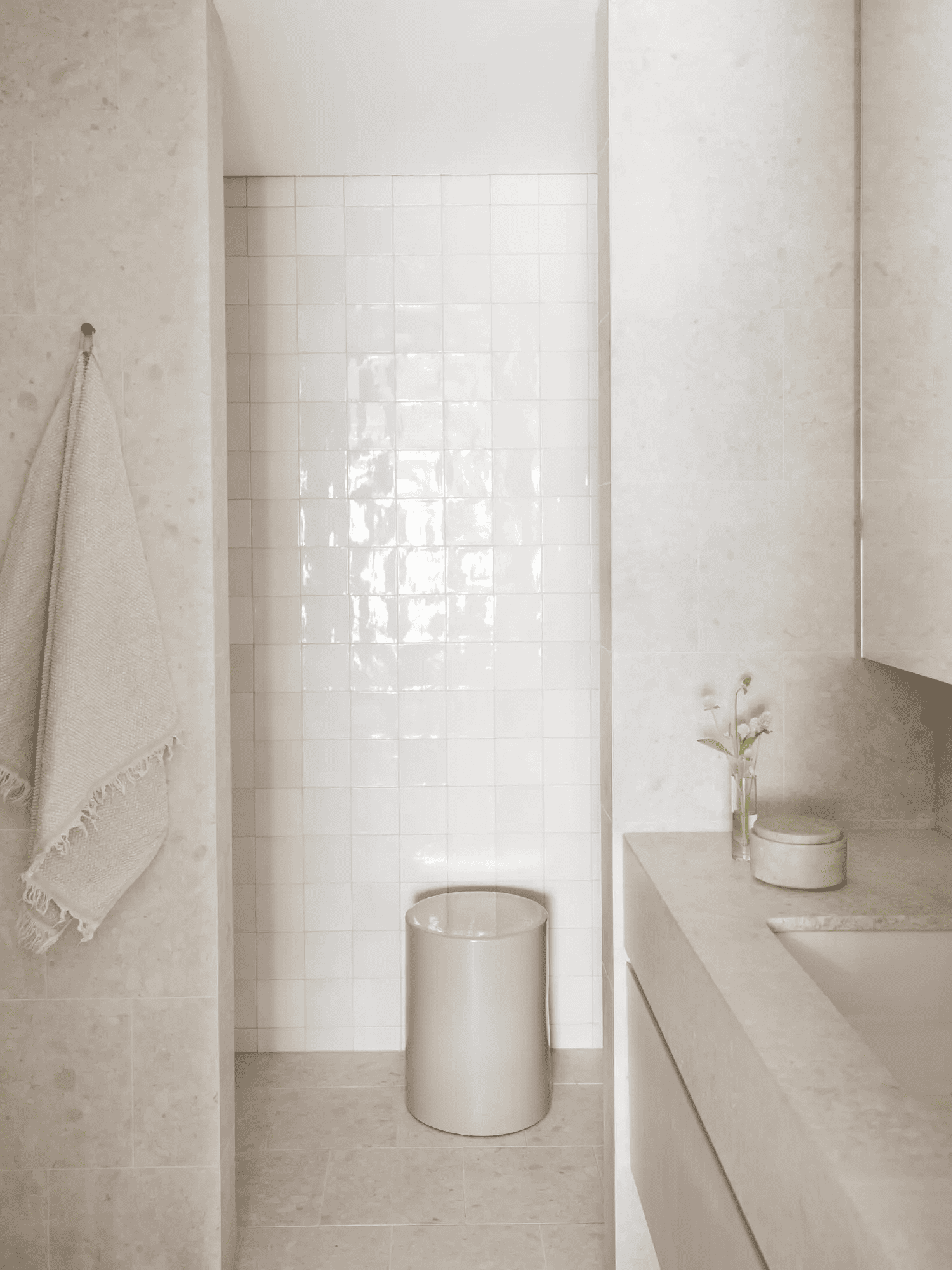
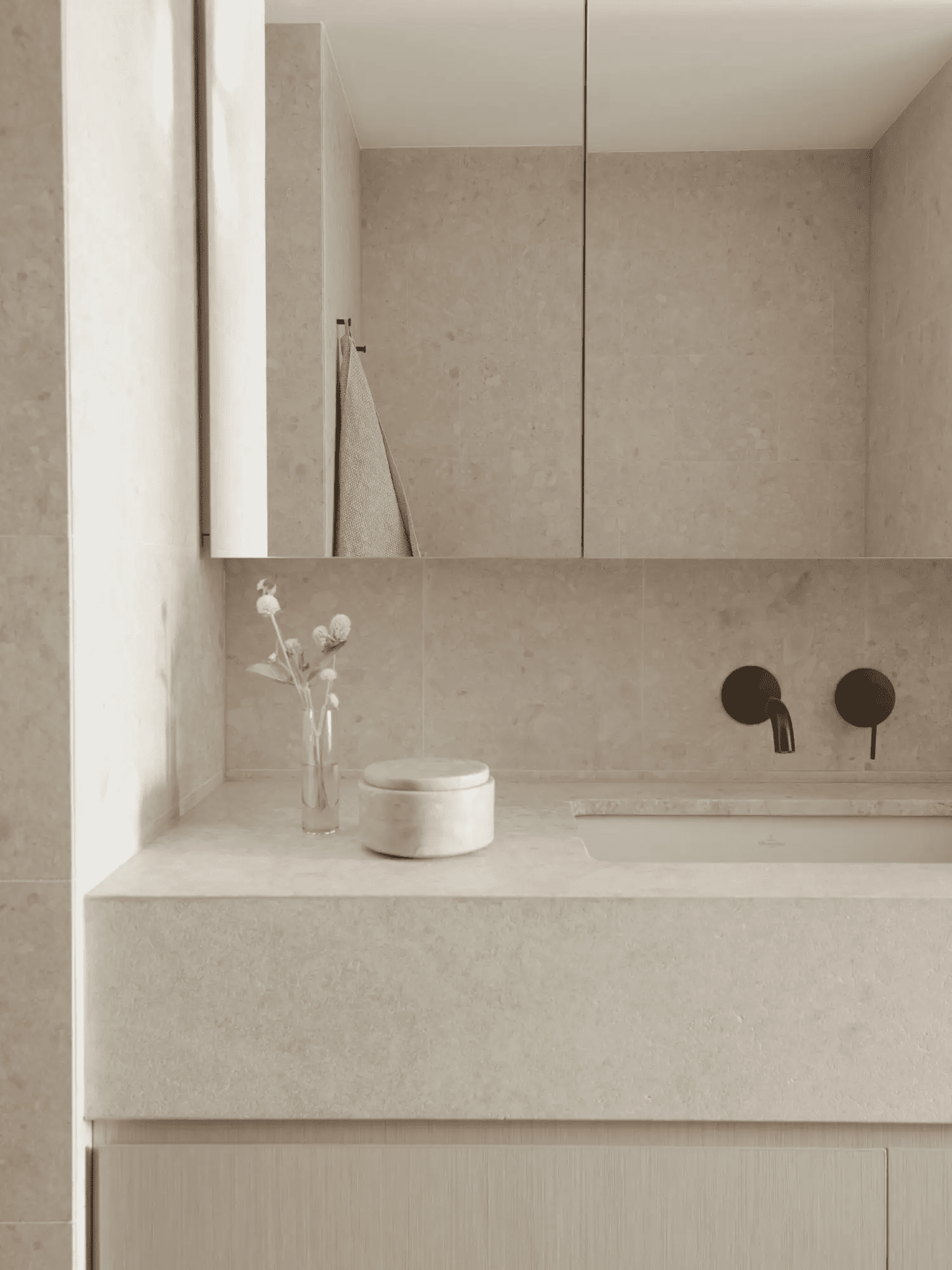
In terms of material and colour selection, the design team aimed to create a bright, light and timeless spatial atmosphere, allowing the external view to become the protagonist of the space. The foundational palette includes lime-washed oak herringbone parquetry flooring, Savannah marble benchtops, and crisp white painted walls.
在材料与色彩的选择上,设计团队旨在营造一种明亮、轻盈且永恒的空间氛围,让窗外的景色成为空间的主角。基础色调包括了石灰处理的橡木人字拼花地板、Savannah大理石台面以及清新的白色粉刷墙壁。
These materials collectively establish a neutral yet warm backdrop, effectively drawing the external harbour scenery into the interior.
这些材质共同构成了一个中性而温暖的背景,有效地将室外海港风光引入室内。
Built between 1910 and 1915, the wharf has become a cherished part of Woolloomooloo's history. Saved from demolition in the late 1980s following public protest, it was subsequently transformed into a precinct housing a boutique hotel, apartments, and dining areas.
该码头建于1910至1915年间,已成为Woolloomooloo珍贵历史的一部分。它在1980年代末曾因公众抗议而幸免于拆除,随后被改造为精品酒店、公寓及餐饮区。
The design team's task was to create a tranquil home within this story-rich space, allowing the young owners to embrace both its historic charm and its prime location.
设计团队的任务正是在这样一个充满故事的空间中,为年轻业主创造一个既能拥抱历史魅力,又能享受绝佳地理位置的宁静住所。
The selection of furniture also reflects careful consideration of textural integration.
家具的选配同样体现了对纹理融合的精心考量。
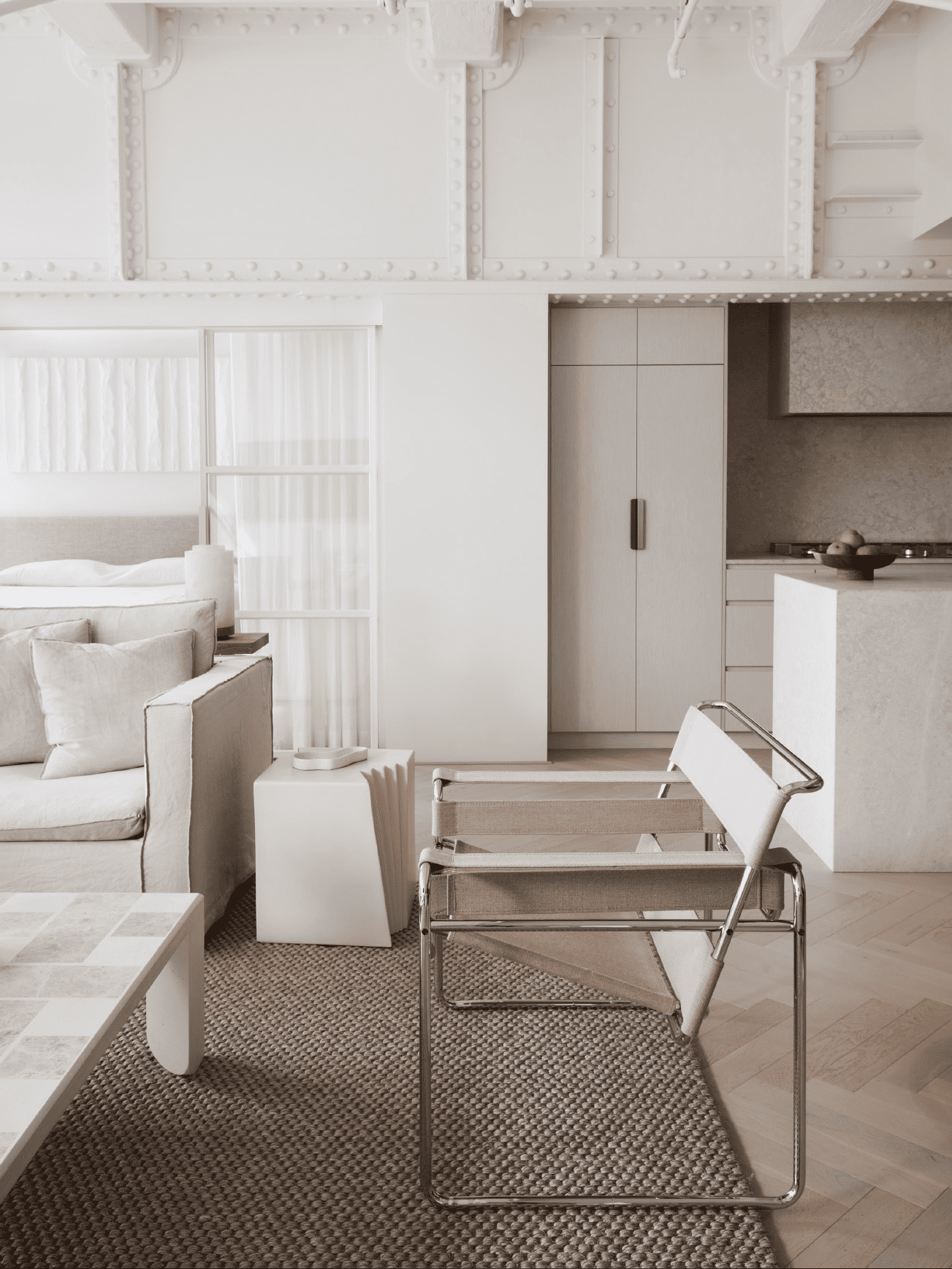
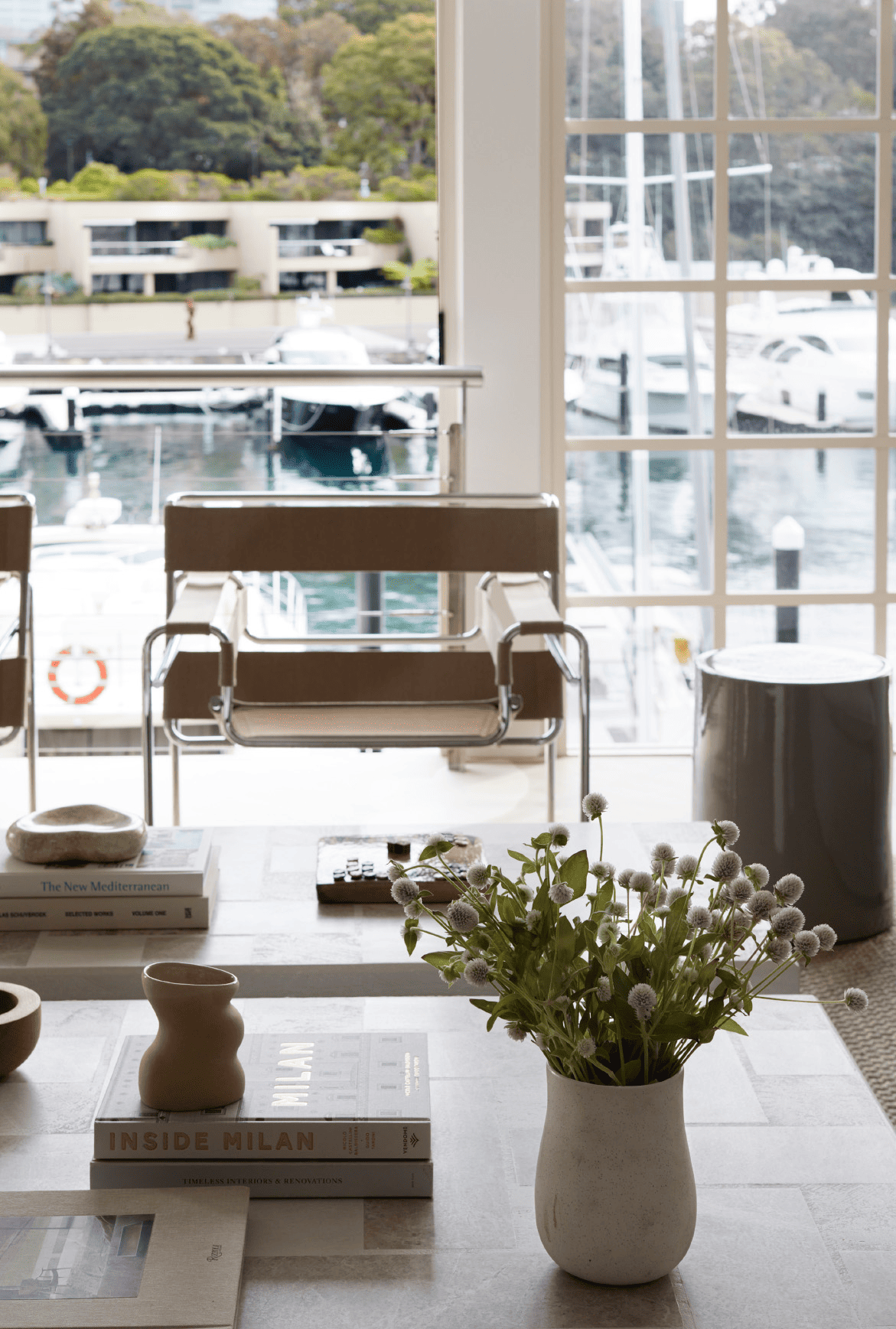
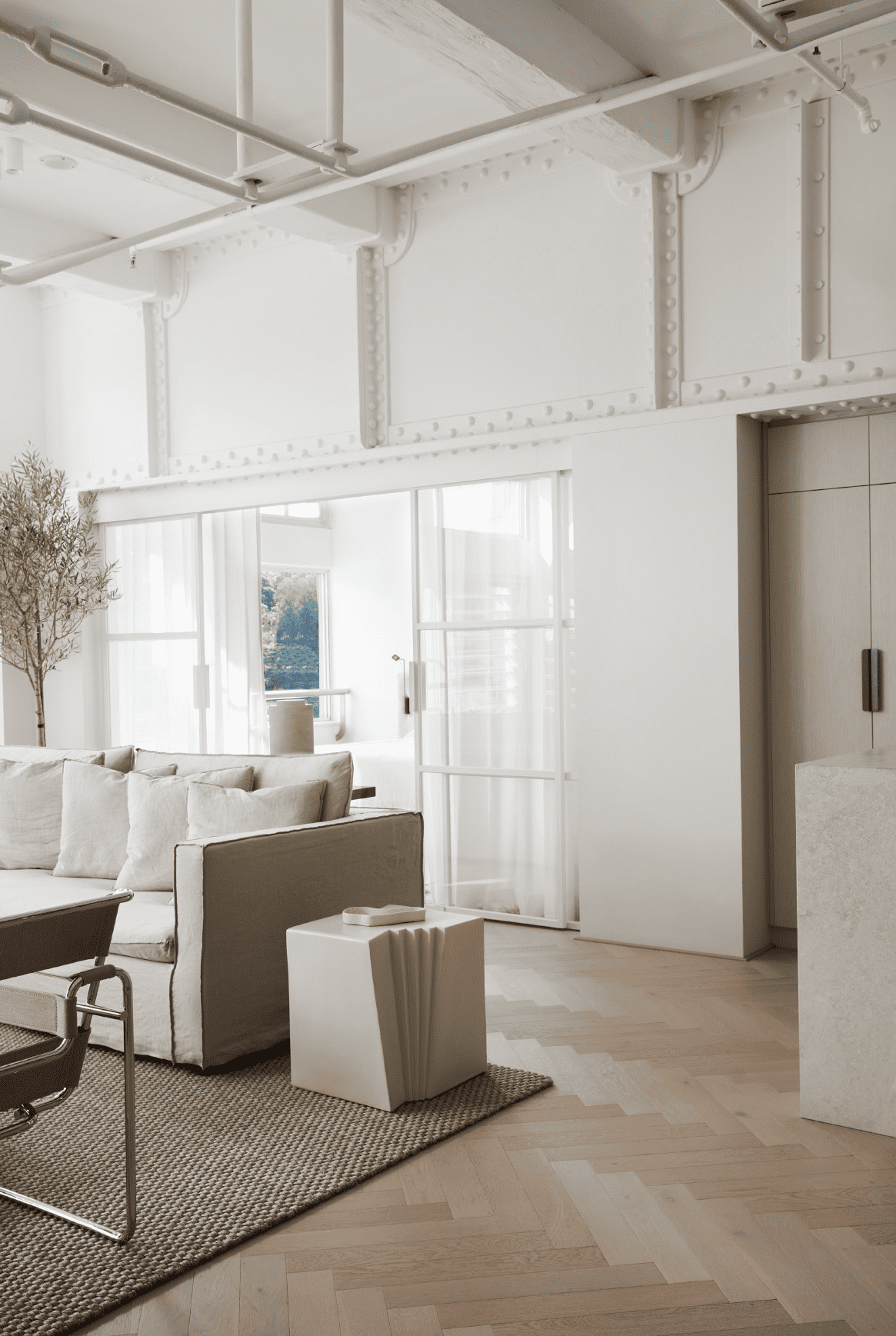
In the living area, a linen sofa, a Knoll Wassily chair in canvas and chrome, and a concrete coffee table are harmoniously placed atop a custom-made sisal rug. This juxtaposition of objects with different material qualities adds depth and interest to the space, all while maintaining an overall simplicity and cohesion.
在客厅区域,亚麻沙发、帆布与镀铬材质的Knoll Wassily椅、以及混凝土咖啡桌,被和谐地安置在定制的剑麻地毯之上。这种不同质感物件的并置,为空间增添了深度与趣味,同时又保持了整体风格的简约与统一。
A secondary bedroom in the original layout, which appropriated much of the living area's natural light, was removed to consolidate the space into a generous master suite.
原始户型中的次卧占用了起居区域过多自然光,因此被移除,从而整合成一个宽敞的主卧空间。
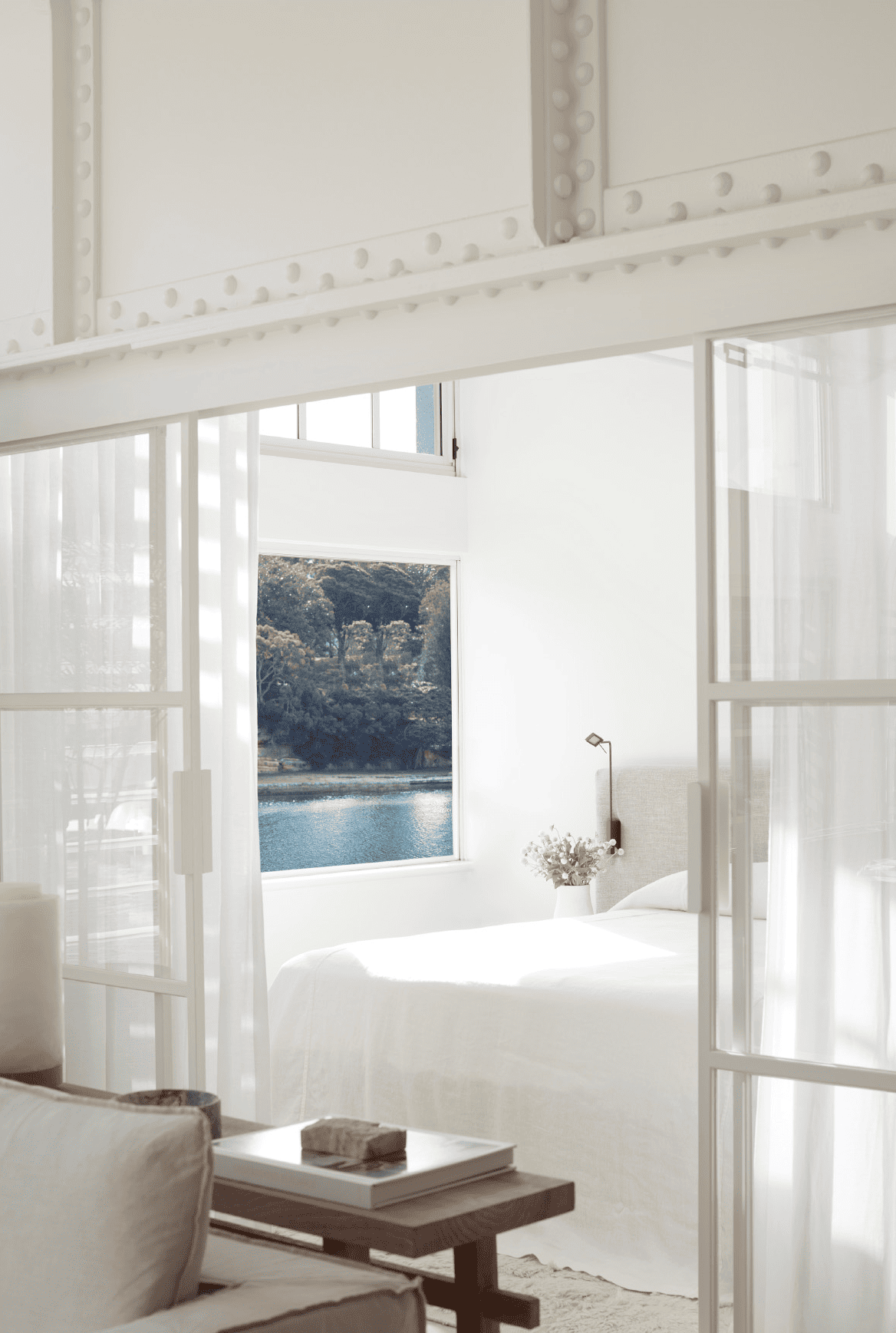
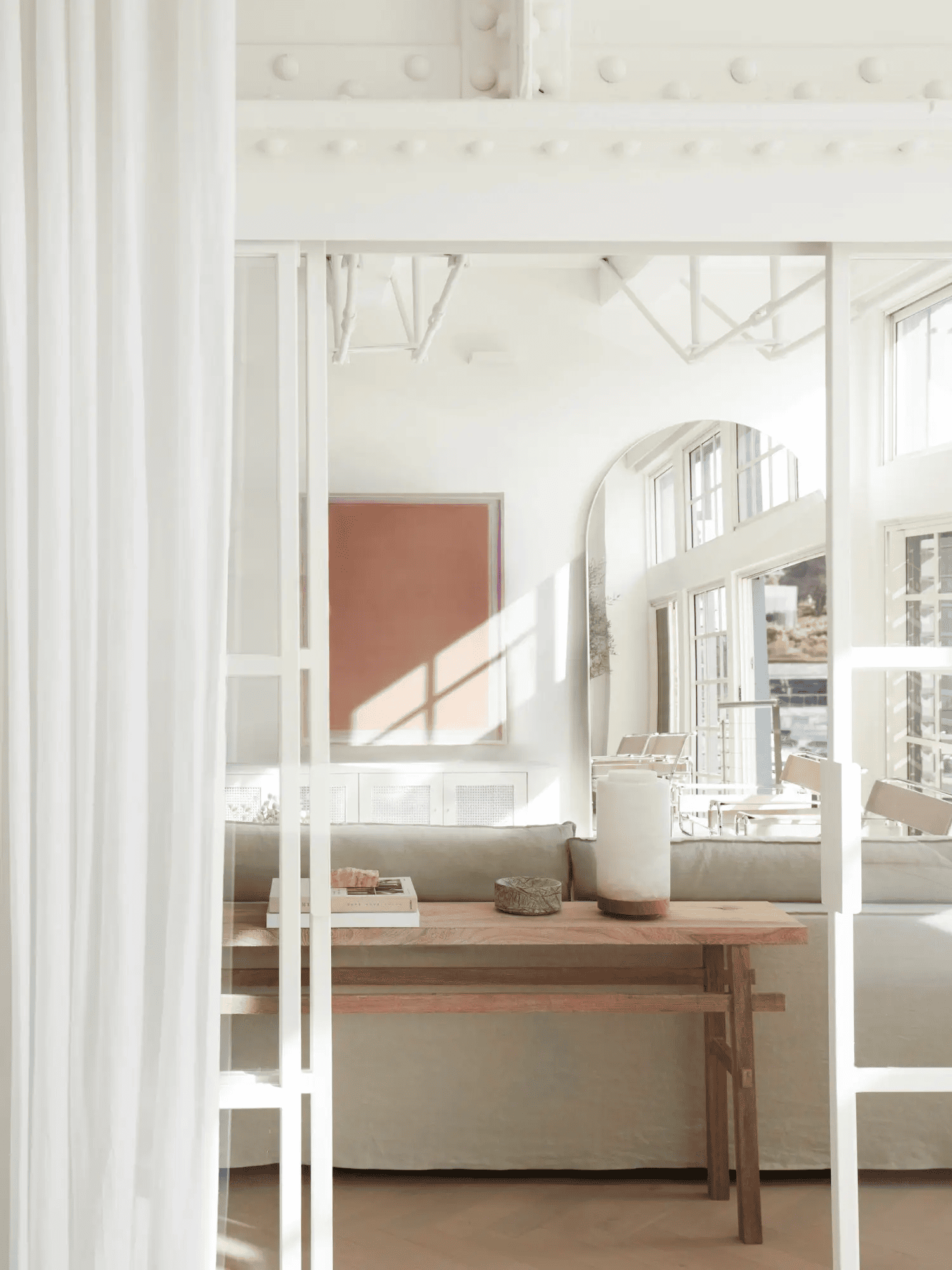
As articulated by Jo Lawless, Co-Director of the firm: "The clients wanted a one-bedroom apartment suitable for daily living, working, and occasional entertaining." Consequently, instead of using a solid wall to completely separate the bedroom from the living room, the design team drew inspiration from boutique hotel design—installing a white steel-framed glass door complemented by linen curtains. This softly defines the transition between public and private zones, ensuring visual transparency and a sense of spatial continuity.
正如事务所联合总监Jo Lawless所言:“客户希望这是一个能满足日常起居、工作和偶尔娱乐的一居室公寓”。于是,设计团队没有用实墙完全分隔卧室与客厅,而是借鉴了精品酒店的设计手法 —— 安装了白色钢框玻璃门并搭配亚麻窗帘,柔和地界定了公共与私密区域的过渡,确保了视觉上的通透与空间的连贯性。
Ultimately, the project successfully bridges the gap between historical heritage and the needs of contemporary living. By preserving the building's inherent structural aesthetics—such as the soaring exposed beam ceilings, steel trusses, and large industrial-style windows—and infusing a simple, refined design language, Lawless & Meyerson have created a home that respects the past while embracing the present.
最终,这个项目成功地将历史遗产与现代生活需求无缝连接。通过保留建筑原有的结构美学 —— 如高耸的裸露横梁天花板、钢桁架和大型工业风窗户,并注入简约精致的设计语言,Lawless & Meyerson打造了一个既尊重过去又面向当下的家。
As Jo Lawless aptly concluded: "When you inhabit a historic building with spectacular views, the design focus should be on directing the gaze outward, not inward."
正如Jo Lawless所总结的:“当你居住在一处拥有壮丽景色的历史建筑中时,设计的重点在于引导人们向外眺望,而非向内审视”。
 Previous Post